Physical Address
304 North Cardinal St.
Dorchester Center, MA 02124
Physical Address
304 North Cardinal St.
Dorchester Center, MA 02124

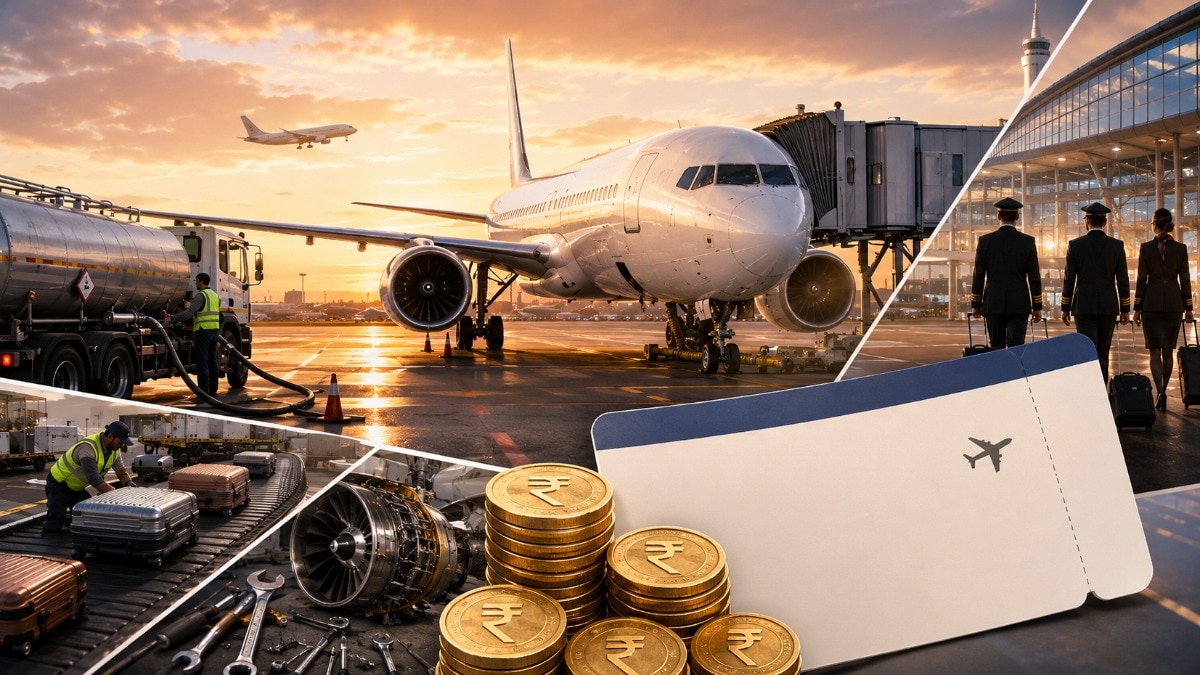
If you’ve ever wondered why airfares remain stubbornly high, fuel is a big part of the answer.
Fuel accounts for nearly 40% of airlines’ operating costs, according to data from the aviation regulator DGCA.
The figures show that for every ₹100 spent by Indian airlines in 2023-24, ₹39.4 went towards aircraft fuel and oil, making it by far the largest expenditure item in the sector.
Must Watch: Why India Needs A Market-Driven Jet Fuel Policy | Narendra Taneja
Fuel costs alone were more than seven times the amount spent on flight crew salaries and expenses, which accounted for just 5.4% of total spending.
The second-largest cost component was flight equipment maintenance and overhaul at 15.8%, followed by other expenses at 12.7%.
Depreciation and amortisation accounted for 10% of airline expenditure, while user charges – including airport and navigation-related fees – made up 8.4%. Sales, promotion, and passenger service expenses accounted for 3.4% of total spending.
The data highlights the heavy dependence of Indian airlines on aviation turbine fuel (ATF), long regarded as one of the industry’s biggest cost pressures.
Any fluctuation in global crude oil prices or ATF rates can have a direct impact on airline profitability and ticket pricing.
The figures have gained relevance after state-owned fuel retailers raised domestic ATF prices by nearly 10% earlier this week, one of the steepest increases in recent months.
The hike comes amid higher global oil prices following the Iran conflict that began on February 28 and has increased pressure on airline operating costs.
Must Read: Noida Airport Eyes Five Million Passengers In Its First Year Of Operations
ATF prices under focus
The cost breakdown comes as airlines assess a new government-backed fuel price stabilisation scheme.
Under the framework, carriers can voluntarily lock in ATF prices at ₹115 per litre for up to three years, compared with the earlier fixed rate of ₹104.927 per litre. Airlines that opt out will continue purchasing fuel at market-linked rates, currently around ₹142 per litre.
The scheme offers protection against future spikes in crude oil prices but could leave participating airlines paying higher rates if global prices decline.
With fuel accounting for almost 40% of airline operating costs, any sustained increase in jet fuel prices is likely to have a direct impact on airline profitability and could eventually influence ticket prices.