Physical Address
304 North Cardinal St.
Dorchester Center, MA 02124
Physical Address
304 North Cardinal St.
Dorchester Center, MA 02124
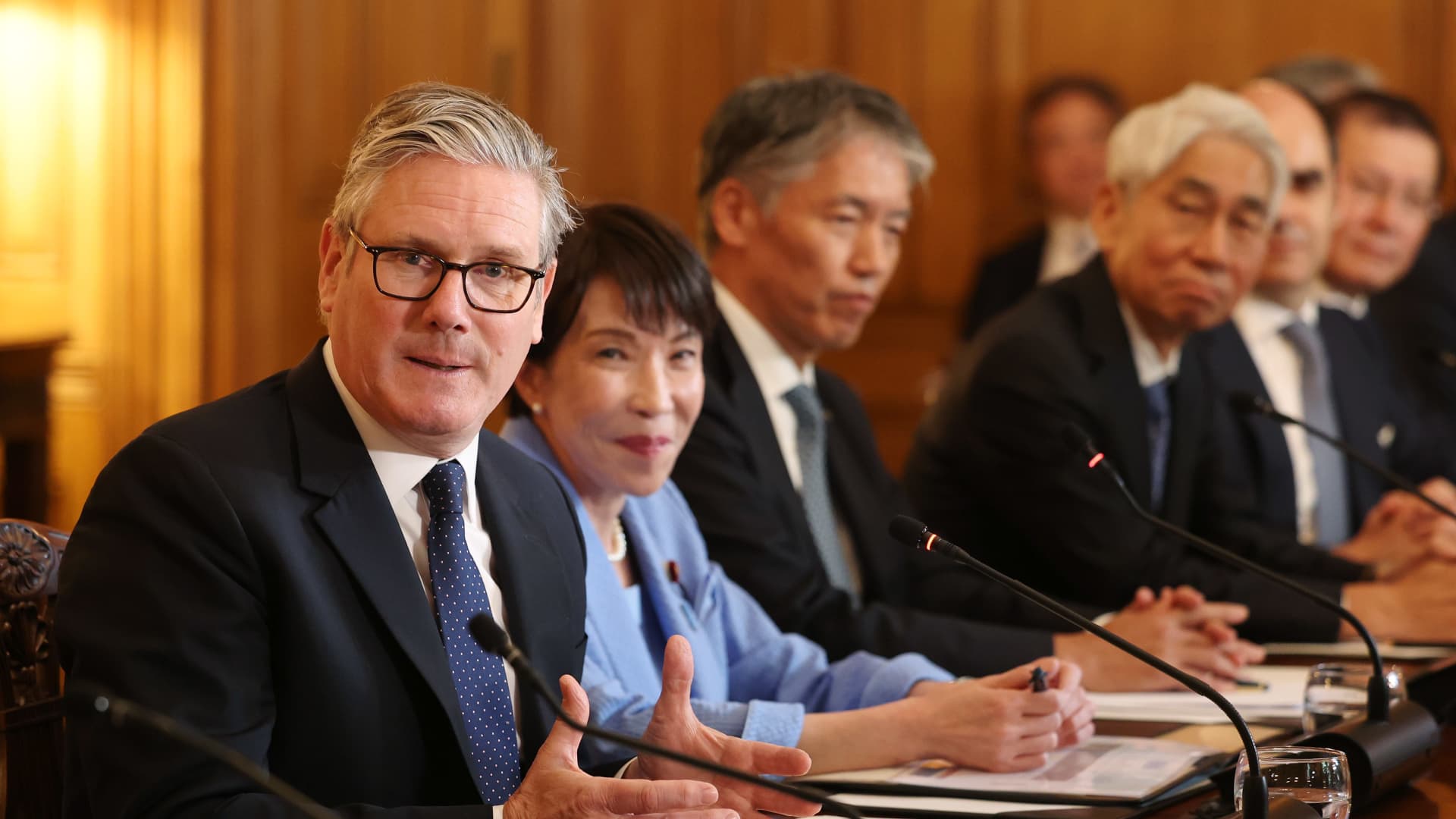
Keir Starmer, UK prime minister, left, works with Sanae Takaichi, Japan’s prime minister, at 10 Downing Street in London, UK, on Sunday, June 14, 2026.
Andy Rain | Bloomberg | Getty Images
World leaders welcomed the U.S.-Iran agreement to end the Middle East war, with some European nations reportedly signaling they were prepared to lift sanctions on Tehran in exchange for the country taking steps to curb its nuclear program.
After more than three months of war, the U.S. and Iran reached a deal on Sunday that would bring an immediate and permanent end to the conflict, according to Pakistan’s Prime Minister Shehbaz Sharif, with a signing set for Friday in Switzerland that’s expected to open 60 days of additional talks on Iran’s nuclear program.
U.S. President Donald Trump said he would authorize the immediate removal of the U.S. naval blockade. While the final terms have not been released, Iranian state media reported last Friday that a 14-page draft memorandum included the U.S. lifting oil sanctions and Iran committing to reopening the Strait of Hormuz within 30 days.
In a joint statement after the agreement was announced, the U.K., France, Germany and Italy commended it as “a moment of opportunity to restore regional stability and stabilise the global economy.”
The group, known as the E4, in the statement also called for the agreement to be “implemented rapidly and comprehensively” and that the “urgent reopening of the Strait of Hormuz with unconditional and unrestricted freedom of navigation is essential.”
The European nations stressed that “Iran must never acquire a nuclear weapon. We stand ready to work with the US, Iran and the IAEA (International Atomic Energy Agency) to this end,” according to Reuters.
U.K. Prime Minister Keir Starmer also welcomed the deal as a “hugely important step forward in ending the war,” while stressing that the Strait of Hormuz, a critical energy chokepoint that has effectively been closed for the duration of the war, must remain “fully and permanently open.”
Japan’s Prime Minister Sanae Takaichi said that the country welcomed the agreement as “a major step toward resolution of the situation,” according to a Google translation of her statement on X on Monday.
“We strongly hope that this memorandum will be steadily implemented, that free and safe navigation in the Strait of Hormuz will be actually ensured, and that a final agreement on Iran’s nuclear issue and other matters will be realized at the earliest possible date,” Takaichi said.
Trump is expected to meet with leaders from the Group of Seven — Canada, France, Germany, Italy, Japan, the U.K — and the European Union at this year’s summit, which starts Monday in France.
The Ministry of Foreign Affairs in Qatar also hailed the deal in a statement, calling it “an important step towards consolidating sustainable peace and promoting economic growth regionally and internationally.”
The deal came after months of stop-start negotiations and bouts of fighting in the region since late February, roiling global energy markets and stoking fears of a global recession.
Oil dropped after the deal announcement Sunday, with Brent crude falling about 4% to $83 a barrel and WTI sliding 4.8% to $80.8.
A finalized peace deal could ease inflationary pressures “enormously,” restore consumer confidence and give global central banks more room to maneuver on monetary policy, Christian Noyer, honorary governor of the Bank of France, told CNBC’s “Squawk Box Asia” on Monday. “We were very much hoping that this sort of event would come as soon as possible.”