Physical Address
304 North Cardinal St.
Dorchester Center, MA 02124
Physical Address
304 North Cardinal St.
Dorchester Center, MA 02124

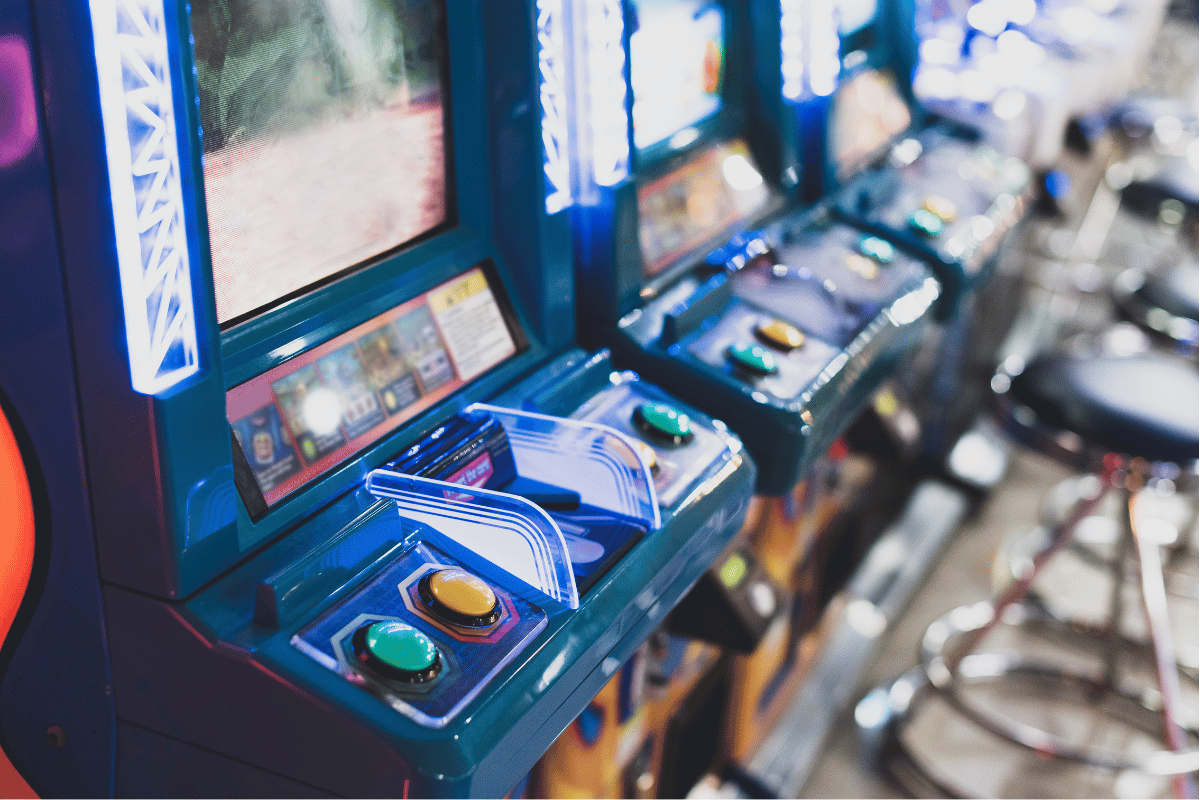
Pennsylvania’s highest court has handed down what could prove to be the most significant gambling decision in the Commonwealth since casino gaming was legalized. In a June 15, 2026, opinion, the Pennsylvania Supreme Court ruled that so-called skill-game machines are subject to both the Pennsylvania Gaming Act and the Crimes Code, overturning years of lower-court decisions that had allowed the devices to operate in a legal gray area.
For more than a decade, skill games spread across Pennsylvania in convenience stores, bars, restaurants, clubs, gas stations and dedicated gaming parlors. The Supreme Court noted that the machines “have been held to fall into a legal gray area outside of the reach of both the Gaming Act and the Crimes Code,” a situation that allowed thousands of devices to flourish throughout the state without the oversight applied to casino gambling.
The industry has long argued its machines are games of skill rather than gambling devices.
Speaking on a special episode of Behind the Bets in PA, Pennsylvania Gaming Control Board Chief Counsel Steve Cook explained that the growth of skill games was closely tied to Pennsylvania’s long-established legal test for determining gambling.
“Pennsylvania has through the course of a series of court decisions what’s called the predominant factor test,” Cook said. “If skill predominates, it’s 51% or more skill over chance, then it would not be gambling under historical Pennsylvania case law.”
Cook said Pennsylvania’s approach differed from states where any element of chance can make a game illegal gambling.
According to him, “it’s that predominant factor test by which skill games entered the market” and eventually expanded across the Commonwealth.
The Supreme Court traced that legal history back to the 1983 case Commonwealth v. Two Electronic Poker Game Machines, which held that courts must examine whether skill or chance predominates when determining if gambling exists. For years, that analysis formed the foundation of arguments supporting the legality of skill-game machines.
The latest legal battle included Pace-O-Matic’s “Follow Me” feature, a memory challenge built into Pennsylvania Skill machines. The court explained that after a losing spin, players can attempt a Simon-style memory game requiring them to repeat increasingly complex sequences. Successfully completing the challenge allows a player to recover 105% of the original wager.
Supporters of the machines argued that because a skilled player could theoretically recover every loss through the feature, chance was not the dominant factor. Trial courts accepted that reasoning, finding that “a patient and skillful player could win at least 105% of the amount played on each and every play by utilizing the Follow Me feature.”
State lawyers took a far different view. According to the Supreme Court opinion, the Commonwealth argued that “Follow Me” was “an obvious fig leaf, included to cloak the game’s primary purpose as a gambling device,” adding that “‘Follow Me’ isn’t there for the players; it’s there for the lawyers.”
Ultimately, the Supreme Court agreed that the legal landscape changed when lawmakers amended the Gaming Act in 2017.
Act 42 of 2017 introduced statutory definitions for both “skill slot machines” and “hybrid slot machines.” Under those definitions, a skill slot machine is a device where skill predominates over chance, while a hybrid slot machine incorporates both elements.
The court concluded that those definitions effectively replaced the old predominant-factor inquiry for slot-machine regulation.
As Justice David Wecht wrote, “it is irrelevant whether the outcome of a game is determined by skill, chance, or any combination thereof.” The opinion further stated that the statutory definitions “plainly eliminate the predominant factor test for any device that otherwise constitutes a ‘slot machine.’”
Cook echoed that interpretation during the podcast discussion.
“The court also said… because the General Assembly did put skill games into the definition of slot machine under the Gaming Act… it took away at least with respect to slot machines this predominant factor test,” he said.
“Now effective yesterday any machine that has any element of chance, even if it’s predominantly skill, is a slot machine regulated by the Gaming Control Board.”
One of the court’s most notable observations focused on the practical inconsistency created by earlier rulings.
Cook summarized the issue this way: “If these games were in a casino, they would be regulated by us. And if they are outside the casino in a gas station down the street, they’re not regulated by us and nobody can do anything about them. That just doesn’t make sense.”
The Supreme Court reached a similar conclusion, criticizing a framework that allowed devices “identical to slot machines in appearance, operation, and function” to operate outside casino regulation while remaining largely beyond the reach of enforcement agencies.
Despite ruling against the industry, the court stopped short of ordering an immediate shutdown. Recognizing that businesses, clubs and organizations had relied on previous court decisions, the justices imposed a 120-day stay.
During that period, “no law enforcement agency is to take adverse action against owners or operators of ‘skill game’ devices in reliance upon this opinion.”
Cook said the court was attempting to avoid sudden economic disruption.
“The 120 days was a recognition by the Supreme Court that some businesses and private clubs and organizations rely on the cash flow that they get from skill games,” he explained.
The pause could prove important because lawmakers are already considering legislation that would create a formal regulatory structure for the industry.
Senate Bill 756 proposes regulation by the Pennsylvania Gaming Control Board, a 35% tax on skill-game revenue, a seven-machine limit per location and a minimum player age of 21. The legislation would also establish a Skill Gaming Fund, with proceeds divided between the state’s General Fund and programs addressing problem gambling.
Supporters of regulation argue that the industry has operated for years without meaningful oversight. In November, Senator Dan Laughlin wrote on X: “Unregulated skill games are undercutting our gaming industry and threatening local jobs, including right here at Presque Isle Downs.”
“I’m committed to finding a fair, enforceable solution that levels the playing field.”
Pace-O-Matic has pushed for regulation as well, though it supports a different proposal. Mike Barley, the company’s Chief of Public Affairs, said: “We look forward to working with Pennsylvania Governor Josh Shapiro and lawmakers to pass common sense regulation and fair taxation of the legal skill game industry. We support Senate Bill 626, sponsored by Sen. Gene Yaw, which does just that.”
Barley argued that alternative proposals could harm businesses and nonprofit groups that depend on machine revenue.
“Skill games help to support thousands of Pennsylvania small businesses, fraternal and volunteer organizations, including VFWs, American Legions and volunteer fire companies,” he said.
The industry has also faced increased scrutiny in other legal matters. In 2025, the estate of murdered gaming-store clerk Ashokkumar Patel was awarded $15.3 million in a negligence case involving Pace-O-Matic and Miele Manufacturing. Pace-O-Matic responded by calling the decision “an unfortunate outcome” and said it planned to appeal.
Meanwhile, law enforcement agencies have continued pursuing illegal gambling operations. In April 2026, Attorney General Dave Sunday announced guilty pleas from Buffalo Skills Games, Inc. and J.J. Amusement, Inc. in a case involving hundreds of illegal video gambling machines.
“Illegal gambling operations are not victimless crimes,” Sunday said. “They can fuel criminal enterprises, exploit individuals addicted to gambling, and rip off consumers with games that are not regulated, provide little or no chance of winning, and do not comply with gambling self-exclusion lists intended to protect those struggling with addiction.”
For now, the Supreme Court has settled a question that dominated Pennsylvania gambling law for years. Whether the future involves regulation, taxation, legalization, tighter controls or prohibition, the next major decisions will come from the General Assembly rather than the courts.
Featured image: Canva