Physical Address
304 North Cardinal St.
Dorchester Center, MA 02124
Physical Address
304 North Cardinal St.
Dorchester Center, MA 02124
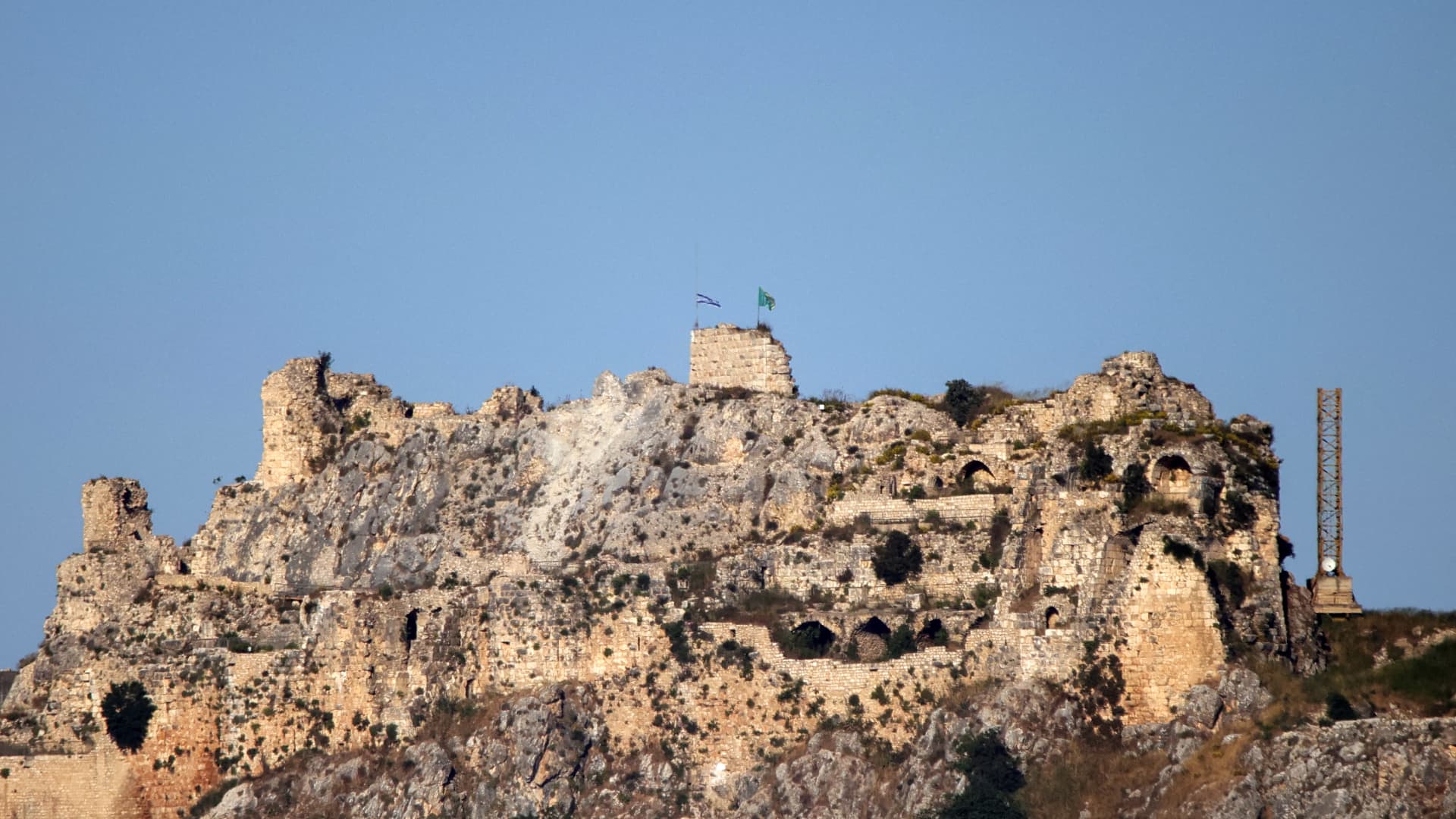
An Israeli flag flies over the medieval Beaufort Castle, known locally as Qalaat al-Shaqif or Shaqif Arnoun, as seen from the Marjayoun area of southern Lebanon on May 31,
– | Afp | Getty Images
Oil prices rose on Monday as the U.S. and Iran launched fresh strikes and Israel ordered troops to push deeper into Lebanon, renewing concerns that clashes with the Iran-backed Hezbollah group could threaten a fragile ceasefire between Washington and Tehran.
International benchmark Brent crude futures rose 3.5% to $94.33 per barrel at around 10:10 a.m. London time (5:10 a.m. ET), while U.S. West Texas Intermediate futures added 4% to $90.91 per barrel.
Brent and WTI closed off by 11.1% and 9.6% last week, respectively, notching their worst weekly performance since mid-April. The contracts remain up by about 30% since the U.S. and Israeli-led war against Iran started on Feb. 28.
The escalation in hostilities, which followed the U.S.-brokered Israeli-Lebanon talks in Washington on Friday, dimmed hopes that Washington and Tehran were nearing an extension of their ceasefire arrangement.

Israeli Prime Minister Benjamin Netanyahu welcomed the capture of Beaufort castle in southern Lebanon by his country’s forces, reportedly describing the move as a “decisive shift” in its expanding ground offensive against Hezbollah. European officials have strongly criticized Israel’s latest escalation.
U.S. President Donald Trump on Monday said via social media that Iran “really wants to make a deal,” insisting that it will be a good one for Washington and its allies. “Just sit back and relax, it will all work out well in the end – It always does!” Trump said in a Truth Social post.
His comments followed a resumption of air strikes between the U.S. and Iran over the weekend, with both sides claiming to have hit military targets near the Strait of Hormuz, a narrow waterway that typically handles around 20% of the world’s global oil traffic.
Talks to bring an end to the Iran war have shown little progress in recent weeks, with both sides locked in an uneasy ceasefire since early April.
Axios reported Saturday that Trump had requested several amendments to the latest terms his envoys had reached with Iranian officials. The report, which cited two unnamed U.S. officials, said Trump’s request hinged on several issues, notably including Iran’s nuclear material. CNBC was unable to independently verify the report.
Jorge León, head of geopolitical analysis at Rystad Energy, said oil traders appear to be pricing in a deal of some kind in the coming weeks, but warned that prices could shoot up to as high as $180 per barrel by August if peace talks crumble.
“Let’s assume that there is no deal and fighting restarts between the U.S. and Iran, we’ve seen a scenario of $180 per barrel by August, and that will mean a severe global economic recession, particularly in Europe and particularly in emerging Asia,” León told CNBC’s “Squawk Box Europe” on Monday.
“We also have the other scenario where suddenly the U.S. and Iran agree on everything, including the nuclear question, including the reopening of the Strait of Hormuz. In that world, prices will rapidly come down to around $70 per barrel by the end of the year,” he added.
The Sea Voyager crude oil tanker anchored off the Port of Long Beach in Long Beach, California, US, on Thursday, May 7, 2026.
Tim Rue | Bloomberg | Getty Images
Goldman Sachs said risks to its fourth-quarter 2026 Brent and WTI forecasts of $90 and $83 per barrel remain “two-sided,” with the bank warning that while persistent Middle East supply disruptions could push prices higher, weakening demand could create meaningful downside risks.
Goldman estimated that weak April oil retail sales data from China and Western Europe together implied around 2 million barrels per day of downside risk to its already subdued demand forecasts.