Physical Address
304 North Cardinal St.
Dorchester Center, MA 02124
Physical Address
304 North Cardinal St.
Dorchester Center, MA 02124

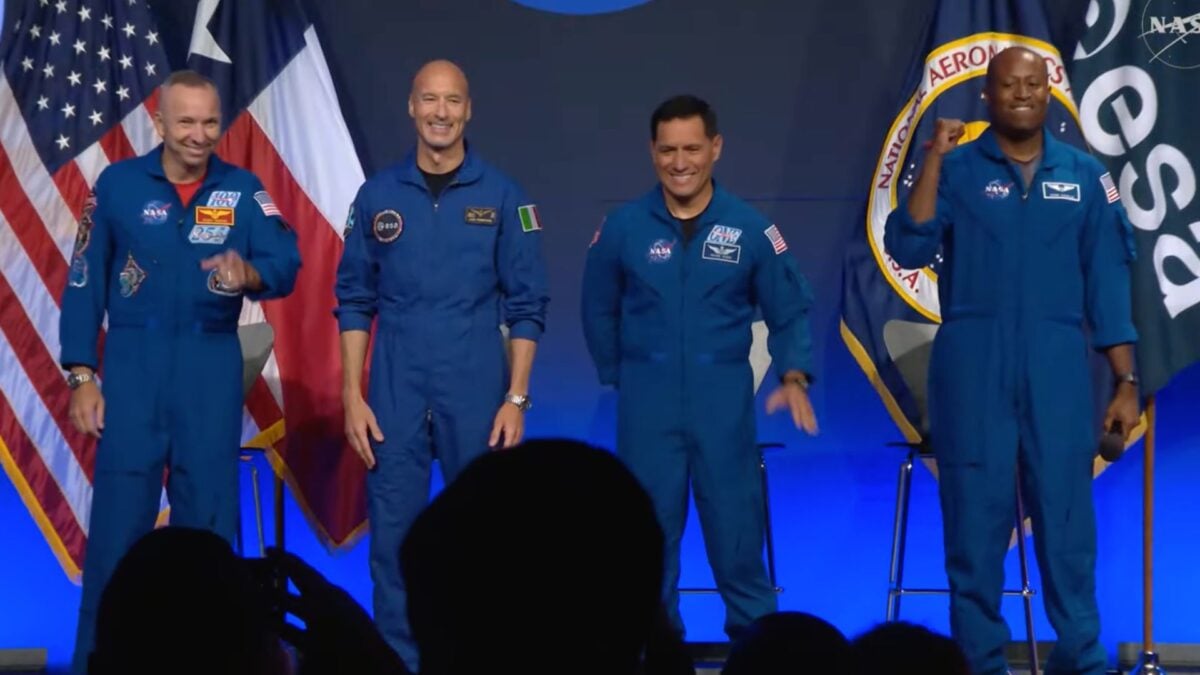
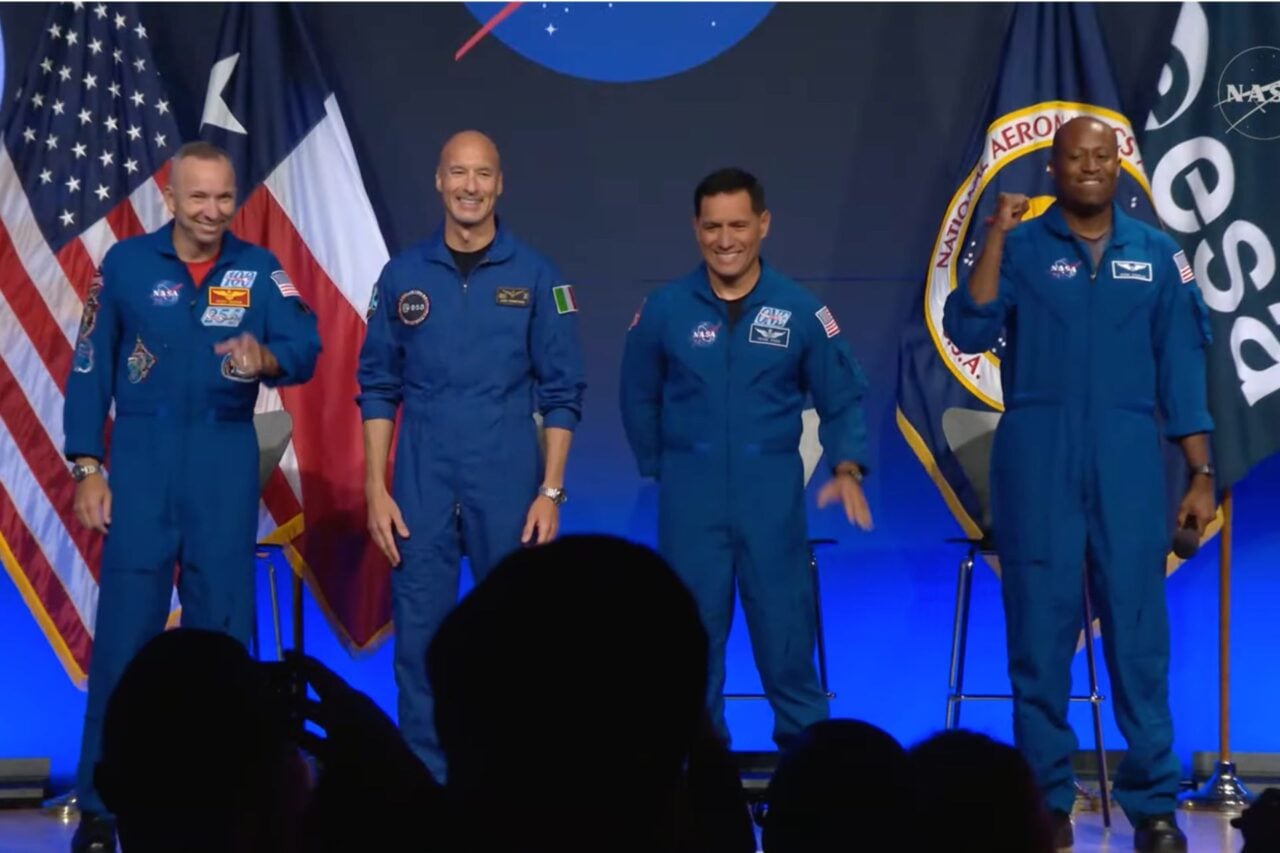
It’s been just two months since the Artemis 2 crew returned to Earth, and NASA is already gearing up for Artemis 3. Today, the agency revealed the four astronauts who will test out its commercial Moon landers in space.
NASA’s Andre Douglas, Frank Rubio, Randy Bresnik, and the European Space Agency’s Luca Parmitano took the stage at NASA’s Johnson Space Center in Houston, Texas, to introduce themselves and share their excitement for the upcoming mission. Douglas and Rubio will serve as mission specialists, Parmitano will serve as pilot, and Bresnik will command the mission. The agency also introduced backup crew member and NASA astronaut Bob Hines, who can step into any role if one of the core four crew members is unable to fly.
During Artemis 3, currently slated to launch in 2027, the agency’s Space Launch System (SLS) rocket will launch the four astronauts aboard the Orion spacecraft from Kennedy Space Center in Florida. They will venture to low Earth orbit, where Orion will attempt to rendezvous and dock with at least one of the two commercial landers built by SpaceX and Blue Origin.
Speaking on behalf of the crew, Commander Bresnik said they are humbled to be “that unifying link between the phenomenal Artemis 2 mission we just had two months ago and the Artemis 4 mission that will follow ours.”
In addition to unveiling the Artemis 3 crew, NASA gave the most detailed update yet on the mission profile.
Jeremy Parsons, acting assistant deputy associate administrator of the agency’s Moon to Mars Program Office, talked through the primary phases of this multi-launch mission during today’s briefing. The first vehicle to lift off will be Blue Origin’s New Glenn, carrying the company’s Blue Moon Mark 2 lander. Despite the recent anomaly that caused the rocket to explode on its launch pad at Cape Canaveral Space Force Station in Florida, Parsons said NASA is confident that New Glenn and its pad will be ready on time for a 2027 Artemis 3 launch.
Once the Blue Moon lander separates from the rocket, it will loiter in low Earth orbit until the SLS launches Orion and the Artemis 3 crew from Kennedy Space Center in Cape Canaveral. After separating from the SLS, Orion will rendezvous and dock with the Blue Moon lander for about two days, allowing the crew to conduct technology demonstrations and cross the hatch to board, operate, and test the life support systems of the lander.
Once docked operations are complete, the crew will return to Orion, and the two spacecraft will separate. Orion will then await the Starship pathfinder. Once in low Earth orbit, Starship will dock with Orion for about one day for checkouts and testing.
After that, Orion will separate from Starship and return to Earth, splashing down in the Pacific Ocean. A team of U.S. Navy and NASA personnel will recover the astronauts and their spacecraft and return them to shore.
The biggest variable determining the timing of Artemis 3’s launch is commercial lander readiness. Both SpaceX’s Starship Human Landing System (HLS) and Blue Origin’s Blue Moon Mark 2 crew lander are still in development, though Jeremy Parsons of NASA’s Moon to Mars Program Office said they are making “great progress.”
Jessica Jensen, vice president of customer operations and integration at SpaceX, revealed that Artemis 3 will not rendezvous with Starship HLS. Instead, the company will launch an off-the-line Starship V3 with an added docking adapter. This would explain why the Artemis 3 crew will not board Starship during the mission—the pathfinder likely won’t be outfitted with the life support systems planned for the fully developed Starship HLS. Jensen did say SpaceX is actively building the first flight-fidelity Starship HLS cabin at Starbase, but it appears NASA has given up on flying the lander during Artemis 3.
John Couluris, senior vice president of Lunar Permanence at Blue Origin, said testing of its Blue Moon Mark 1 cargo lander—the pathfinder for the Blue Moon Mark 2 crew lander—will conclude “soon” and added that the lander will be ready for a demonstration flight this year. That depends, of course, on whether New Glenn and its launch pad can support a launch so soon. Meanwhile, manufacturing of Blue Moon Mark 2 is “well underway” and on track for a 2027 launch, Couluris said.
With Artemis 3 coming into clearer focus, the mission is finally starting to feel real. We still have a long wait until liftoff, but humanity’s return to the Moon has never seemed closer.