Physical Address
304 North Cardinal St.
Dorchester Center, MA 02124
Physical Address
304 North Cardinal St.
Dorchester Center, MA 02124

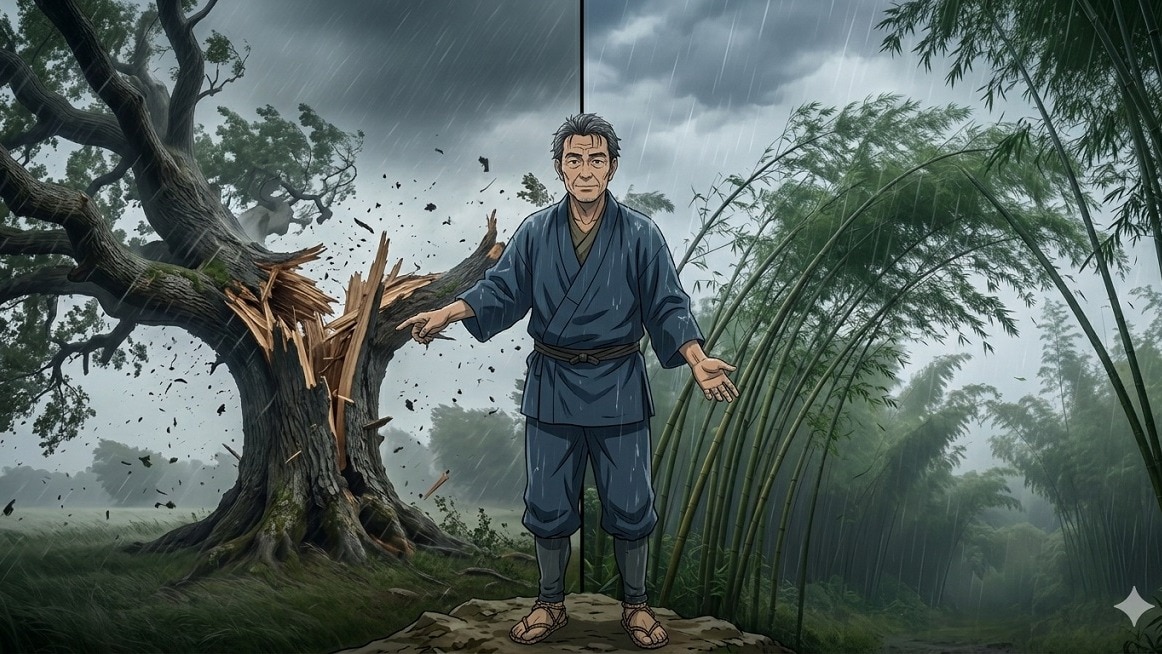
“The bamboo that bends is stronger than the oak that resists.” — a classic Japanese proverb (a great reminder to be adaptable when life throws the unexpected your way).
We often associate strength with being rigid, unyielding, and standing our ground like the oak. But when the winds truly howl, it’s the ability to flex, pivot, and adapt that actually keeps us standing.
What the proverb means
At its core, this proverb challenges our traditional ideas of strength. We often think of power as rigid, solid, and unyielding — like a massive oak tree. But the proverb reveals a deeper, more sustainable kind of strength: dynamic resilience.
When a severe storm hits, the oak relies entirely on its rigidity. It fights the wind. If the force of the storm exceeds the structural limits of the wood, the oak snaps at the trunk or gets uprooted entirely.
Bamboo takes a completely different approach. It doesn’t fight the wind; it yields to it. By bending, it distributes the stress of the storm along its entire hollow structure, allowing the wind to pass over it. Once the storm subsides, the bamboo returns perfectly to its upright position.
The Lesson: True strength isn’t about being unbreakable; it’s about being adaptable. Yielding isn’t a sign of weakness or defeat — it is a deliberate tactic for long-term survival.
How the proverb applies for businesses today
In business, this proverb separates agile companies from rigid legacy corporations. Today’s market faces constant “storms” — from AI disruption to supply chain crises. Rigid, “oak” companies resist change with bureaucratic hierarchies and outdated five-year plans, risking total collapse when the market shifts.
“Bamboo” businesses survive by embedding adaptability into their core strategy:
Ultimately, market disruption is guaranteed. Long-term corporate survival belongs not to the strongest or largest companies, but to the ones that learn how to bend.
Why it remains timeless
This proverb has survived for centuries because it reflects a fundamental law of nature: change is inevitable.
Human history is littered with empires, corporations, and individuals that grew incredibly powerful, became rigid, refused to adapt, and eventually collapsed. The philosophy remains timeless because the human condition doesn’t change; we will always face unexpected storms — whether they are economic downturns, personal losses, or global shifts.
By praising the bamboo, the proverb reminds us that survival belongs to the flexible. It gives us permission to let go of the exhausting burden of trying to control everything, showing us that we can survive almost anything simply by learning how to bend.