Physical Address
304 North Cardinal St.
Dorchester Center, MA 02124
Physical Address
304 North Cardinal St.
Dorchester Center, MA 02124

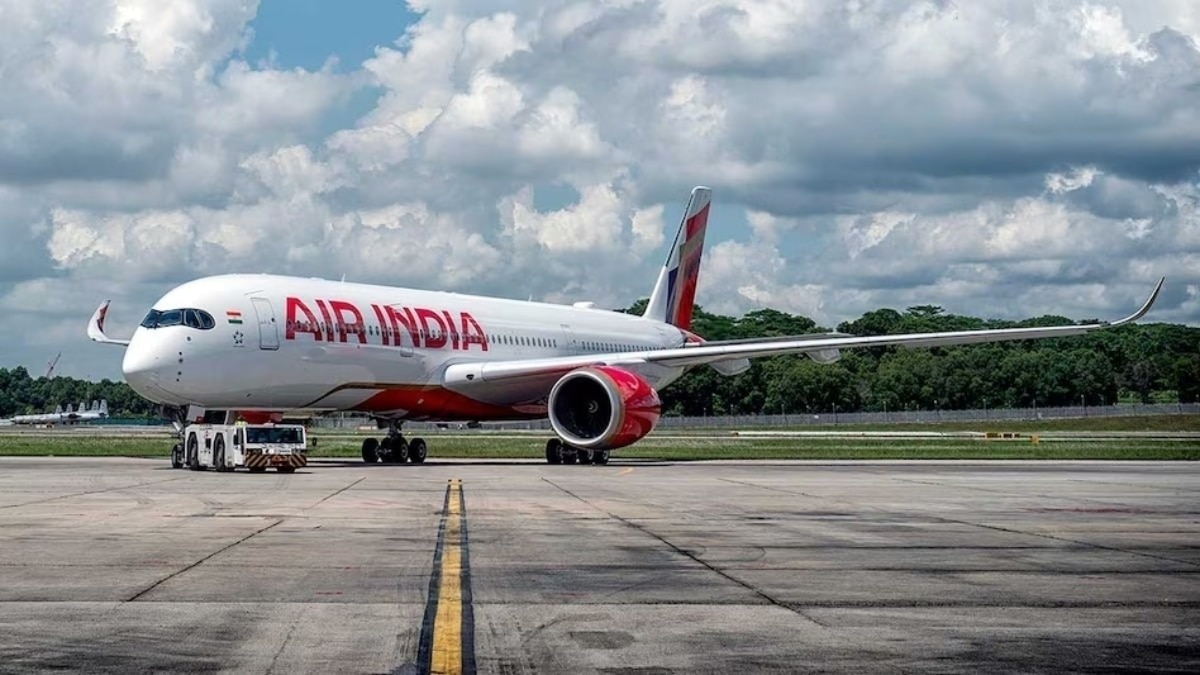
Air India is considering slowing aircraft deliveries, scaling back expansion plans and reviewing some routes as parent Tata Group pushes the carrier to prioritise reducing losses and stabilising operations, according to a Bloomberg report citing people familiar with the matter.
The move would mark a shift from the airline’s aggressive growth strategy pursued since its return to the Tata Group in 2022.
According to the report, Air India is in discussions with Airbus and Boeing to defer deliveries from its massive order book, which includes around 600 aircraft placed between 2023 and 2025. The majority of these planes are scheduled to arrive in 2027 and 2028.
Delaying deliveries would allow the airline to postpone large payments due upon handover. Airlines typically pay the bulk of an aircraft’s purchase price — often around 80% — when the plane is delivered.
Air India is also reassessing plans to launch new domestic and international routes and may delay operations at certain airports, including the upcoming Noida International Airport near Delhi, the report said.
MUST READ: One year after AI171 crash, Gujarat announces Spine hospital, physio college, 510 new hostel units worth ₹547 cr
Mounting challenges
The strategy shift comes after a series of setbacks that have put pressure on the airline’s finances.
According to Bloomberg, the carrier has accumulated losses of more than ₹55,000 crore ($5.8 billion) since 2022, with annual losses estimated at around $3 billion. The mounting losses have reportedly become a concern for Tata Trusts, which controls Tata Sons, the majority owner of Air India.
The airline has also faced operational disruptions over the past year. The fatal crash involving an Air India aircraft last June, the closure of Pakistani airspace to Indian carriers and the conflict in Iran have forced airlines to reroute flights, increasing fuel costs and affecting schedules.
MUST READ: Air India crash probe not the first to miss one-year deadline
In addition, the weakness of the Indian rupee has added to the pressure, as a large portion of airline expenses, including aircraft leases, maintenance and fuel-related costs, are denominated in US dollars.
From expansion to consolidation
After taking control of Air India in January 2022, Tata Group launched an ambitious transformation programme aimed at modernizing the airline and regaining market share.
The airline, founded by J.R.D. Tata in 1932, had spent 69 years as a state-owned carrier before returning to the Tata Group. The conglomerate currently owns 74.9% of Air India, while Singapore Airlines holds a 25.1% stake following the merger of Vistara with Air India in 2024.
Air India and its low-cost arm, Air India Express, have benefited from strong travel demand and India’s economic expansion, but profitability has remained elusive.
Responding to Bloomberg’s report, an Air India spokesperson described the claims as “highly speculative” and said the airline remains committed to fleet modernization and its long-term transformation strategy.
Airbus did not respond to requests for comment, while Boeing declined to comment, according to Bloomberg.
Despite the reported reassessment, Air India had earlier announced temporary flight cuts this year because of the Iran conflict and airspace disruptions, underscoring the challenges facing the carrier even as it seeks to transform itself into a world-class airline.
MUST READ: Air India responds to Vijay Rupani’s daughter: ‘No deadline or pressure to accept payout’