Physical Address
304 North Cardinal St.
Dorchester Center, MA 02124
Physical Address
304 North Cardinal St.
Dorchester Center, MA 02124
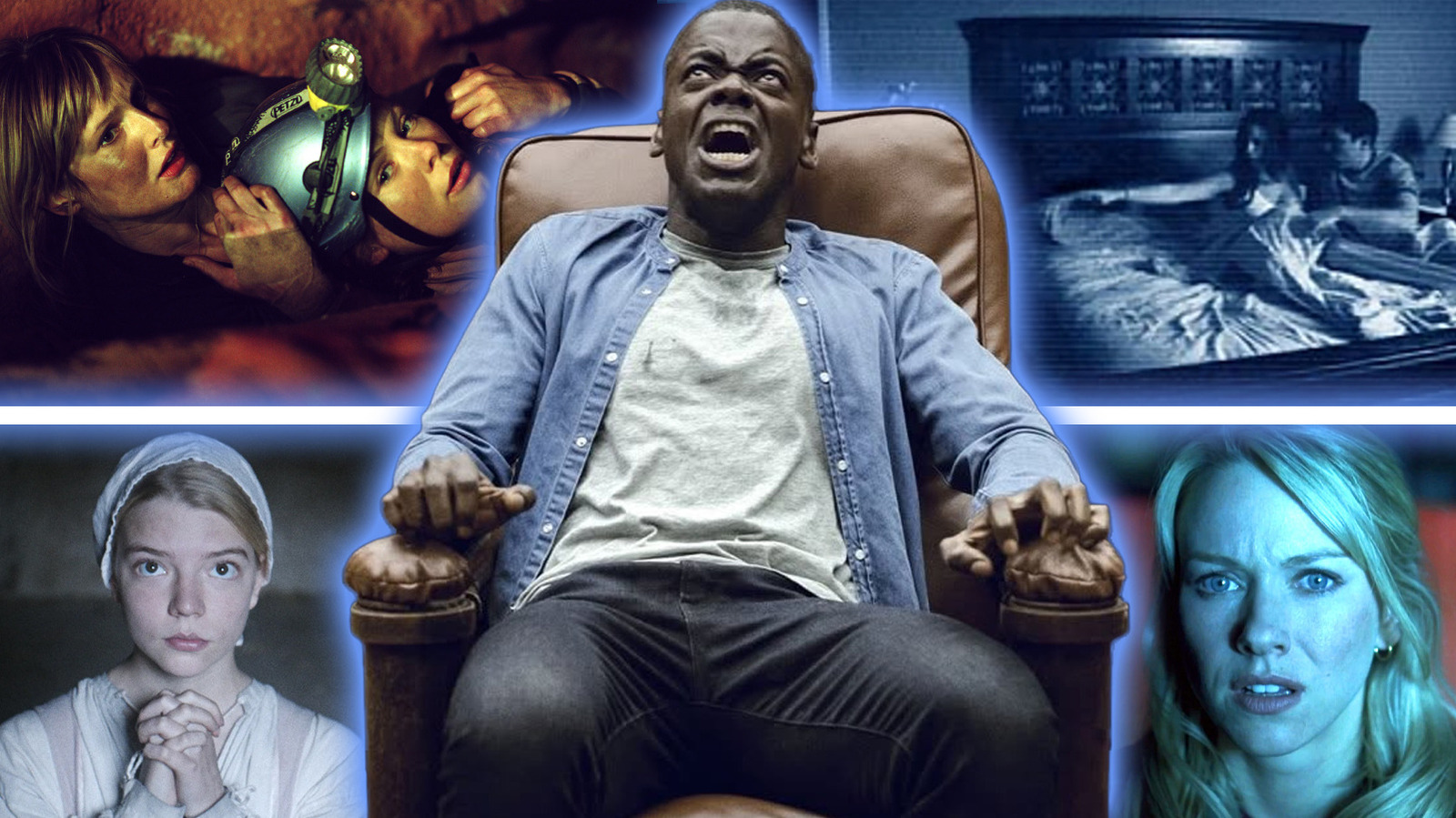
The horror genre has followed an unpredictable trajectory in the 21st century. The new millennium was immediately prefaced by a found-footage revelation with “The Blair Witch Project,” the last vestige of great ’90s horror. In 2000, this was followed by a clunky assemblage of shoddy Hollywood fright fests, the steady stream of independent arthouse titles, and the rise of international J-horror and its endless American remakes. More recent years have seen a rejuvenation and rebuilding of the genre’s overall identity. Sure, you’ll always have your “Scream 7” and the like, but distribution and production houses like Blumhouse, A24, and Neon have changed horror on its face for a new generation, from new forms of sleek haunted-house thrill rides to more solemn, metaphorical brands of “elevated” horror.
That’s all to say that, in any case, we’ve gotten a lot of good horror movies over the past 25 years or so. Boiling them down to the best of the best is an almost impractical task. And yet, here they are, calling them as we see them: the best horror movies that the young century has had to offer, as determined by a mix of impact, lasting influence, and pure quality. Collectively, they encompass the breadth of the genre’s diversity, which continues to prove itself a huge cultural draw — people like being scared, and these are some of the best to ever do it.
Here are the best horror movies of the 21st century.
The reputation of “It Follows” has grown since its 2014 release, even as its successful box office run helped usher in a new era of arthouse indie horror. David Robert Mitchell’s debut feature looks to the past to help propel the future of horror films, in direct conversation with the observational quality of suburban terror found in films like “Halloween” and the chain-reaction horror of “The Ring,” while forging a memorable, distinct identity.
Most general audiences remember it as “the STD demon movie.” But don’t let the dismissiveness of that jokey nickname deter you. The conceit, in which young woman Jay Height (Maika Monroe) is stalked by a shape-shifting entity after a sexual encounter, makes for a terrifically creepy exercise in tension and uncertainty, as Mitchell encourages the audience to scan the screen at all times for the monster’s potential arrival, often disguised as ordinary people following Jay. It has an ominous mood and style to spare and marked Monroe’s arrival as a compelling lead in genre projects. You’ll want to catch up with this one, as Mitchell and Monroe are returning for the sequel “They Follow,” currently in production.
“Let The Right One In” has only grown in esteem since its 2008 debut, now acclaimed as one of the best horror films of the 21st century — even horror master John Carpenter loves it. The 2010 American remake, “Let Me In,” was well-received in its own right, but the original Swedish film by director Tomas Alfredson, based on John Ajvide Lindqvist’s novel, remains an irrefutable vampire movie that reexamines the creature as an achingly lonely and unsettling entity.
The understated premise follows Oskar (Kåre Hedebrant), a bullied and withdrawn young boy in the gloomy suburbs of Stockholm, who befriends the curious Eli (Lina Leandersson), his new next-door neighbor. Alfredson carefully observes the tender, eerie relationship sourced from Lindqvist’s text of two outsiders finding each other, a poignant friendship that’s complicated by the gradual understanding of what Eli is. “Let The Right One In” cultivates an icy, melancholic mood that contrasts with the film’s infrequent shocks of bloody violence, creating a stark juxtaposition within this resonant character piece that functions as much as a love story as a disquieting horror picture.
You can take umbrage at the largely redundant and nonsensical sequels that would eventually make up the franchise, but “Paranormal Activity” was an undeniable phenomenon upon release, and it still holds up today. Made on a $15,000 budget, “Paranormal Activity” became the most profitable movie of all time and one of the most unexpected box office hits in Hollywood history, thanks to an extremely successful viral marketing campaign and strong word-of-mouth. This is a maverick among late-2000s horror films.
The easy-to-grasp, intimate premise also helped: Couple Katie (Katie Featherston) and Micah (Micah Sloat) suspect a supernatural entity is haunting their home, so they set up a camera in the corner of their bedroom to record what happens at night. That simple conceit launched “Paranormal Activity” into the stratosphere because of the recognizable quality of its haunted-house antics. The camera positioned at the foot of the bed, documenting the supernatural terrors in the dark all night long, has become an iconic image representing the fear of what might lurk in one’s own home.
There’s a ton of horror movies about grief — hey, we have a list of the best ones! While grief and trauma have long been staples of thematic exploration within the genre, “The Babadook” set the template for a whole new era of arthouse horror movies that blend horrific scenarios with trenchant, heady themes and metaphors that represent the human condition.
That puts the legacy of Jennifer Kent’s Australian breakout monster movie into question if you’re tired of that particular brand of indie horror, but you can’t deny the effectiveness with which “The Babadook” began the trend. This film about bereaved single mother Amelia (Essie Davis) and her hellion child, Samuel (Noah Wiseman), both haunted by the fantastical storybook creature The Babadook, perfectly balances its allegorical aspects with its haunted-house frights, including genuinely freaky creature design achieved through practical makeup, stop-motion, and puppetry. But its most visceral intensity comes from placing you within the subjectivity of a woman and mother at the end of her rope, navigating the grievous complexities of facing down a life defined by tragedy and anguish.
There’s a reason this 2007 Spanish film by Jaume Balagueró and Paco Plaza is on our list of the scariest found-footage films. “[REC]” arrived and did something the genre often misses: It justified the format. The film follows a television reporter, Ángela (Manuela Velasco), and her cameraman as they accompany a fire crew into a Barcelona apartment building that’s quickly quarantined by authorities. From there, it’s pure, unforgiving, lean, and relentless claustrophobia, with the camera’s limited perspective serving as both a source of genuine dread and a stylistic device.
Indeed, “[REC]” gave found-footage a new gear. You watch it and admire the sustained chaos — it’s short and loud, full of ultra-haphazard camerawork, people screaming at each other, and monsters taking chunks out of them. The film hardly breaks for breath and culminates in a final sequence that proves Balagueró’s and Plaza’s chops for frightening and satisfying a horror-seeking audience. [REC] continues to deliver top-tier frights.
“Lake Mungo” is the kind of horror film that sneaks up on you slowly. One of the scariest horror movies you’ve likely never seen, this 2008 Australian faux documentary from writer-director Joel Anderton follows the Palmer family in the aftermath of their teenage daughter Alice’s drowning. Presented entirely as a documentary, the film investigates a series of strange occurrences around the family home that suggest Alice’s ghost may be lingering.
“Lake Mungo” handles its ghost story with quiet effectiveness, but the true draw of the film is its function as a meditation on grief and the hidden lives we keep from one another. The story of Alice Palmer (Talia Zucker) feels notably indebted to “Twin Peaks” (a young girl with the last name Palmer who drowns, serving as the catalyst for supernatural events, signals that Anderton was aware of this). He maps the same tragedy of troubled youth onto a haunted house movie, where the ghost is obscured by the camera’s fuzz and digital noise, and where buried secrets wield just as much dread as the ghost’s presence.
If you ask science, “Sinister” is the scariest horror movie ever made. You may be ready to refute that notion on its face, but you’d be surprised how easily this 2012 thriller from director Scott Derrickson gets under your skin. It casts Ethan Hawke as Ellison Oswalt, a true-crime writer with a reputation to rebuild who moves his family into a house where a gruesome murder took place. While settling in, he discovers a box of Super 8 home movies in the attic, and their contents set Hawke on a perilous path of terror.
Hawke is excellent in a movie carried almost entirely on his back, selling Ellison’s obsession and deteriorating rationality with the kind of grounded commitment you can expect from the performer. So too does Derrickson frame everything in a suffocating darkness that generates palpable unease long before any of the film’s more overt scares kick in. The real draw, of course, is the Super 8 footage sequences, which are patently disturbing in their gruesome depictions of murders, their scratched-up, grimy frames adding to the unease, while you’re persistently threatened by the potential presence of the demon Bughuul. This is just good demon-movie stuff.
Gore Verbinski’s 2002 American adaptation of Hideo Nakata’s “Ringu” inspired an entire wave of American J-horror adaptations that learned all the wrong lessons from Verbinski’s creepy, adept handling of the original material. Naomi Watts plays Rachel Keller, a journalist investigating a mysterious videotape whose viewers die exactly seven days after watching it, a perfectly hooky conceit that would later inspire other imitators of the “chain-mail” type of horror movie, like “It Follows.”
What Verbinski got right in his adaptation, which directors of subsequent remakes didn’t, is that Nakata’s original worked so well through a blend of atmosphere and imagery, not jump-scares and pure mechanics. He translates that sensibility faithfully. The film is deliberately paced, visually cold and washed-out, and, more than anything else, committed to an accumulating, inescapable sense of dread. “The Ring” helped define a particular flavor of early-2000s mainstream horror, and it holds up considerably better than the era’s reputation elsewhere might suggest. Now, 24 years later, it’s a true horror masterpiece.
The horror genre was never the same after Ari Aster announced himself with “Hereditary.” This slow, dense, emotionally punishing film is also quite bleakly funny, using the conventions of occult horror as a vehicle for exploring familiar trauma and grief with an uncomfortable level of intimacy. Toni Collette stars as Annie Graham, a miniature artist whose difficult mother has just died, leaving behind unresolved tensions. And also a demon.
With Hereditary, Ari Aster morphs the tenets of familial melodrama into a darkly comic assembly line of tragedy and terror for his characters. The dexterity with which he controls this tone of overwhelming, suffocating dread is what earmarked him as the new voice of horror and genre, which he’s now sustained for close to a decade. There’s no doubt that “Hereditary” has contributed to a tired, overarching trend of “arthouse horror,” the type of genre movies that position themselves as being a little bit more high-minded than your average studio schlock, but it can lay claim to being an exceptional tastemaker, one that ranks very highly on our ranking of every Ari Aster movie.
Danny Boyle’s “28 Days Later” reinvigorated zombie horror when it needed it most. The landmark 2002 British film opens with Cillian Murphy’s Jim waking up alone in an abandoned London hospital weeks after a viral outbreak has overrun the country. As Jim steps out into the world, the viewer is treated to the image of a deserted London, eerily still and unclaimed, living on as one of the most indelible horror images of the century so far. That’s until the zombies show up and Jim has to begin to fend for his life in an entirely new world.
“28 Days Later” innovated the zombie genre for new, modern audiences in a couple of ways. It recasts the zombie as a creature of pure aggression rather than a shambling menace, establishing the template for fast-moving infected that would go on to define the genre for years. Then there’s the unforgettable camerawork: filmed using a consumer-grade Canon XL1 digital camcorder, “28 Days Later” has a now-iconic, gritty, dirty, sometimes flat-out ugly style that emphasizes the unforgiving nature of the apocalypse. Watching it today, it feels reflective of our dark times, interested in how human societies collapse and reconstitute themselves under catastrophic pressure.
Horror virtuoso James Wan revitalized the classic haunted-house movie for contemporary audiences with this smash-hit throwback ghost movie that launched an expansive, ongoing cinematic universe. “The Conjuring” deserves credit where other modern horror films don’t, because it’s an exceptionally well-made mainstream haunted-house film that understood what audiences wanted before they even knew they wanted it. A precise and instinctual craftsman, Wan shows his gifts at their sharpest in “The Conjuring.”
The film earns nearly all of its scares through careful staging and escalating tension. Vera Farmiga and Patrick Wilson, as Ed and Lorraine Warren, are a warm, grounded anchor at the center of the horror — despite the Warrens themselves being polarizing figures with long-disputed claims of hauntings and possessions, the film itself delivers reliably. As far as late-20th-century horror pastiche goes, you couldn’t ask for a better imitation, with sleek, polished filmmaking that draws the viewer into the events through expertly staged camerawork. There are plenty of lazy haunted-house and ghost movies released every year — “The Conjuring” is the work of someone who loves the genre and understands the resonance it can hold.
Neil Marshall’s “The Descent” holds a particular place in 21st-century horror: It’s one of the most purely terrifying experiences the genre offers, and it achieves that with real economy and craft. This nail-biter about a group of hobbyist spelunking women who get trapped in an unexplored cave system that holds dangers far beyond what they signed up for endures as a cult classic for its suffocating atmosphere and unpredictable story trajectory.
The genius of “The Descent” is its patience. Marshall gives the film room to establish its characters and the underlying friction among them before revealing the true horrors lurking within the endless caverns — spoilers if you haven’t seen the film, but there’s a reason “The Descent” is on our list of the 50 scariest horror movie monsters. Once the film shifts to our characters being actively hunted through these caverns, it really comes alive, making this the kind of underground monster movie that others of its ilk look to as a model for how to do this stuff right.
Robert Eggers’ debut feature works hard to earns its dread, and by its final moments, you become aware of how it’s kept you holding your breath. “The Witch,” subtitled “A New England Folktale,” follows a Puritan family expelled from their plantation colony in 1630 and forced to settle at the edge of a dark, looming forest where something is clearly wrong. Eggers, who spent years researching the period, built his dialogue from historical journals and court records, giving the film a texture of authenticity that makes it all the more unsettling.
Eggers has become associated with exacting shots of perfectly composed tableaus that get shared on cinematography social media accounts, but “The Witch” isn’t really like that. This movie is just exceptionally well-made and perfectly conveys its tone of dreary supernatural and religious portent. There are no conventional jump scares, as Eggers builds his horror through atmosphere, paranoia, and dangerous religious fanaticism. More than anything else, the dread of “The Witch” stems from its Puritanical origins, forcing the audience to confront the unease of our ancestors’ beliefs.
Jonathan Glazer’s 2013 feature “Under the Skin” is a sci-fi film that pays tribute to its meticulous forebears, such as “2001: A Space Odyssey” and “Solaris.” Based on the 2000 novel of the same name by Michael Faber, it stars Scarlett Johansson as a stoic, merciless alien lifeform that has taken the shape of a human woman, and it takes her to the dark, rainy streets of Scotland to trap and harvest the unwitting men who cross her path.
“Under the Skin” is a uniquely unsettling movie, with an ambient, existential form of horror that functions more through imagery and mood than through narrative mechanics. Glazer is less interested in plot than in sustaining a particular, dreamlike unease, crafting surreal, disorienting sequences in which Johansson slaughters the men she crosses paths with. Glazer captures footage guerrilla-style, often filming people who don’t know they’re in a movie, while the story intersects with modes of examining the human condition. The film makes one wonder how so many of the men picked up find themselves in this situation because of their objectification of the human body and, simultaneously, reflect on how Johansson’s casual barbarity denies any notion of human empathy. It’s one of the absolute best horror movies of the century, because of how viscerally it captures the harrowing modes of the human condition.
I mean, really, what 21st-century horror movie has defined the genre more than “Get Out” from writer-director Jordan Peele. The “Key & Peele co-creator and co-star made the leap from sketch comedy to feature filmmaking with this breakout social thriller about a Black man visiting his white in-laws and being met with a disturbing conspiracy related to his race, one he has to outrun before he’s potentially trapped forever.
Featuring an Academy Award-winning screenplay by Peele, “Get Out” broke through the elite barrier of prestige that typically allows awards bodies to exclude horror movies. He now casts a long shadow over the horror of the 2020s, full of films from directors who want to hit the same lightning-in-a-bottle. But the keen mix of social satire, genre-movie suspense, and genuine comedy is the kind of thing that can only come from a virtuoso moviemaking mind, who struck when the iron was far past hot.
“Get Out” is the full package: a piece of pop-art entertainment with a message cleanly nestled into the story, encouraging viewers to take what they’ve seen home and mull over how it reflects the state of the world as they see it. It’s the ideal version of social horror, and we’re still in the middle of all its downstream effects.