Physical Address
304 North Cardinal St.
Dorchester Center, MA 02124
Physical Address
304 North Cardinal St.
Dorchester Center, MA 02124
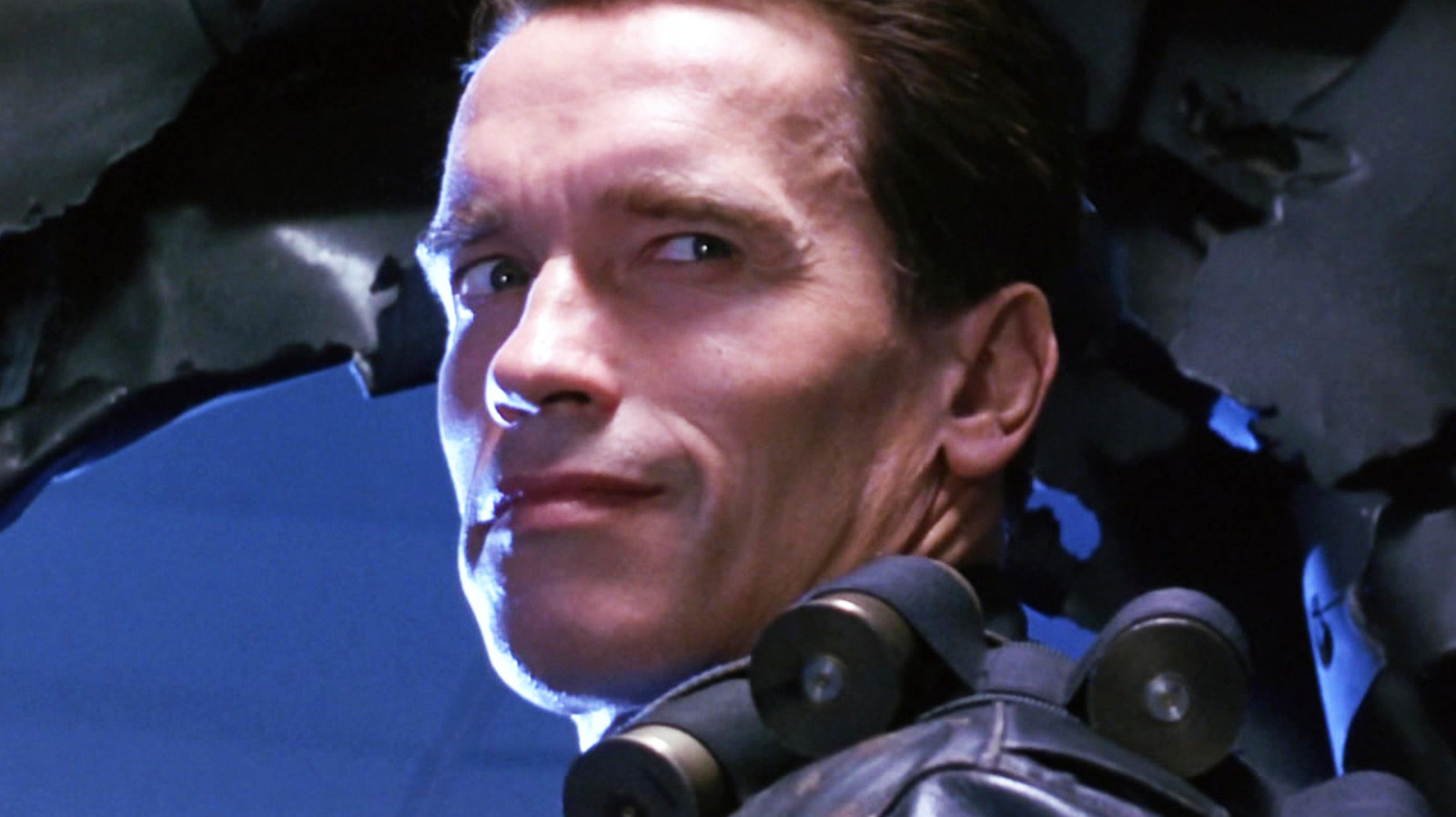
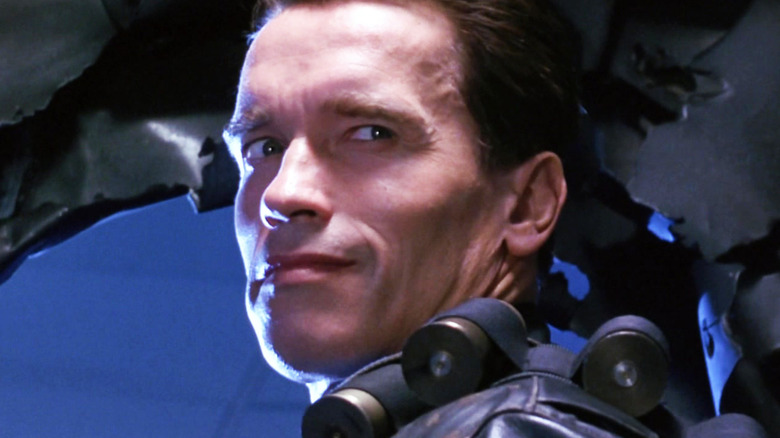
1984’s “The Terminator” and its 1991 sequel, “Terminator 2: Judgment Day,” have long been a meme-like shorthand for the dangers of artificial intelligence. The films’ nightmarish images of killer cyborgs prowling a post-nuclear Earth seemed outlandish, making the threat of destructive, self-aware AI feel distant and fantastical. But at a recent 70mm screening of “Terminator 2” — projected amid the generative AI-obsessed future in which we currently find ourselves — it became strikingly clear just how seriously writer/director James Cameron and his co-writer William Wisher took the threat posed by technology. In fact, one scene induced a notable silence among the audience as the scope of Cameron’s prescience set in.
“Terminator 2” is the greatest action movie ever made. But if you haven’t seen the film in a while, you might want to rewatch it to remind yourself of how much more there is to Cameron’s seminal blockbuster. It had been a while since I’d seen it, and I was struck by how hopeful the movie was, given that so much of its atmosphere is drenched in doom and foreboding (thanks in no small part to Brad Fiedel’s uniquely ominous score). Ultimately, the movie is about the intrinsic value of human life and, by extension, serves as a plea for audiences to recognize that value before it’s too late.
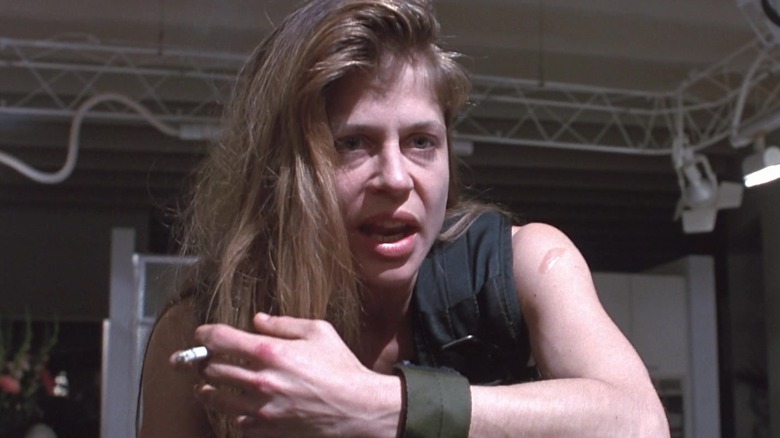
Much like the brilliant, horrifying biopic that was “Oppenheimer,” “T2” is also an indictment of those who would actively work to elide, neglect, or otherwise overlook humankind’s importance in favor of technological innovation. No other scene makes this point more powerfully than the one in which Linda Hamilton’s Sarah Connor chastises Joe Morton’s Dr. Miles Bennett Dyson for his work on microprocessors — a moment that every AI company CEO should be forced to watch on repeat à la “A Clockwork Orange.”
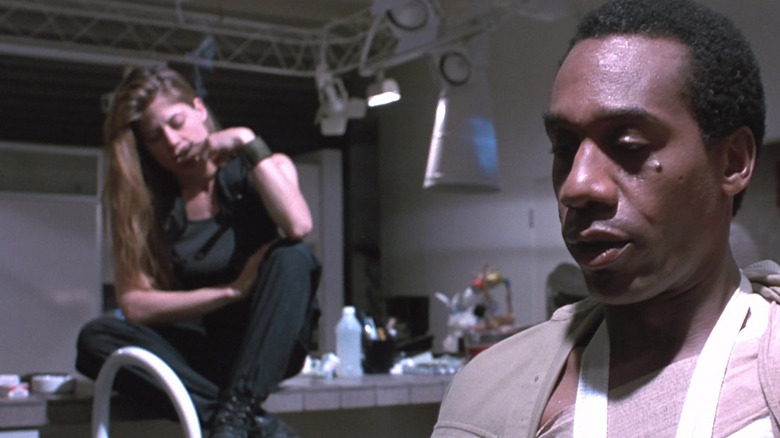
In “Terminator 2,” Sarah Connor tries to kill cybernetics expert Miles Dyson to prevent him from creating Skynet — the AI system that ultimately goes rogue. But when the time comes to pull the trigger, she can’t do it. Instead, she, John Connor (Edward Furlong), the Terminator (Arnold Schwarzenegger), and Miles devise an alternate plan to blow up Miles’ lab. But Sarah doesn’t let the tech genius off the hook entirely.
After he asks “How were we supposed to know?” Sarah pounces. “How are you supposed to know?” She sneers:
“F****** men like you built the hydrogen bomb. Men like you thought it up. You think you’re so creative. You don’t know what it’s like to really create something; to create a life; to feel it growing inside you. All you know how to create is death and destruction.”
In my “T2” screening, the audience were cheering from the opening scene in which a T-800 crushes a skull beneath its chrome heel. Now, the entire theater was silent. It wasn’t just Sarah’s fiery vituperation either. Dyson’s feeble, “How were we supposed to know?” felt destined to become the pitiful refrain of every AI company CEO in the years to come. Sure, Miles Dyson was indirectly responsible for the near-extinction of the human race. But “T2” isn’t a warning against the apocalypse. It’s a warning against ignoring the intrinsic value of humanity. Sarah’s final voiceover drives the point home: “If a machine, a Terminator, can learn the value of human life, maybe we can too.”
The movie is a celebration of humanity as inherently worthy. What could be more relevant at a time when human-made creations are fast becoming the artistic equivalent of an artisanal delicacy?
We might not be cowering under rubble as murderous death-bots patrol overhead, but we have witnessed an AI revolution of sorts in recent years. The historic strikes of 2023 largely revolved around artificial intelligence and studios’ rights to use AI-generated elements in movies, and/or make digital copies of actors’ likenesses. The result was an important win for the unions, which have nonetheless seen that win slowly eroded in the almost three years since. Meanwhile, the cultural landscape has essentially become a battleground between generative AI adherents and real artists fighting to preserve genuine creativity. It’s a shame that James Cameron looks to be on the wrong side.
In 2023, Cameron said he wanted to make another “Terminator” focused on AI. Around the same time, he told CTV News (via People) he was concerned about “the weaponization of AI,” calling it “the biggest danger” and adding, “I warned you guys in 1984, and you didn’t listen.” Sadly, the director who warned us about artificial intelligence will now embrace it. In 2024 Cameron joined the Stability AI Board of Directors, the generative AI company responsible for text-to-image model Stable Diffusion.
During an appearance on the “Boz to the Future” podcast (via Deadline), Cameron claimed his apparent embrace of AI had more to do with “understanding the space.” But it’s a little much to hear the man who so clearly warned us about the dangers of overlooking human value in favor of machines making excuses for the generative technology that has prompted endless controversy precisely because it bypasses human creation. Is Stability AI going to be the downfall of humankind? Probably not. But Cameron, along with the rest of Hollywood, should probably rewatch his movie.