Fast-moving startup Kalshi just gave Wall Street another reason to eye prediction markets.
The federally regulated platform that lets users bet on the outcome of almost everything recently said its crypto derivatives product crossed $1 billion in notional volume less than a week after launch.
The milestone comes as Kalshi and rival Polymarket are actively making moves to cater to Wall Street customers. They’re pitching that they are growing into a broader platform for finance where businesses, investment funds, and everyday investors can hedge some of their risks.
The New York Knicks helped Kalshi put the business case on display last week. A Manhattan sports bar, The Jeffrey, offered customers a free bar tab of $100 each if the Knicks won game one of the NBA Finals. To hedge their risk, the bar also placed a bet on the Knicks winning on Kalshi.
The Knicks victory brought in a little under $13,000 to the sports bar, “just about covering the entirety of the discounts,” owner Andrew Freedman told Yahoo Finance, calling the publicity stunt a “dream scenario all around.”
Polymarket last week announced it had completed its first block trade aimed at helping a trading firm hedge exposure to GPU compute. Similarly, Kalshi notched its first block trade between a Texas hedge fund and market maker on carbon allowances in April.
Despite the speed of growth, prediction platforms are running into an age-old problem for big Wall Street institutions: The rules are still being written.
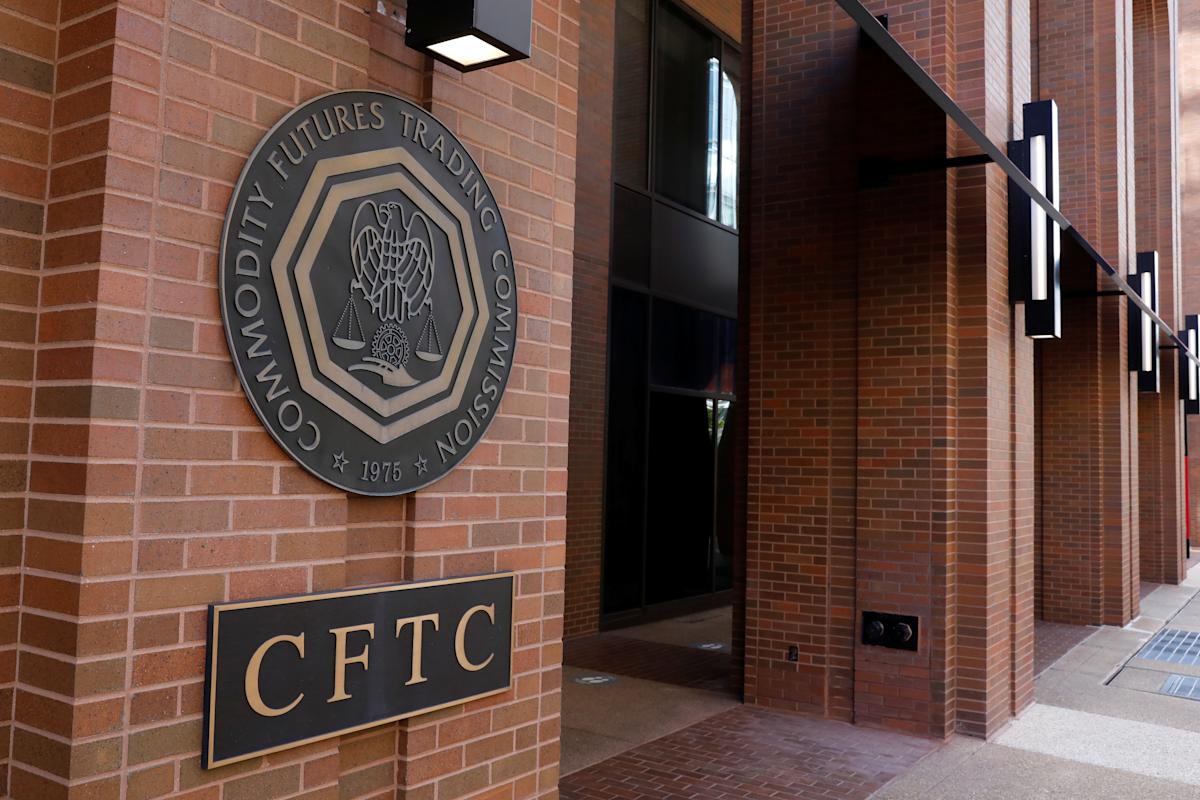
The Commodity Futures Trading Commission (CFTC) on Wednesday proposed new rules for prediction markets, laying out a framework for determining which events contracts can trade on federally regulated platforms and which can be blocked.
The proposal aims to draw sharper lines around how it will police contracts tied to unlawful activity, war, terrorism, and gaming. The agency is proposing a test over whether specific contracts pose market integrity risks and if a platform can effectively administer and monitor trading.
That matters because the case for institutions using prediction market platforms is “ramping” but “still in early innings,” according to Julie Hoover, a Bank of America analyst.
“Given some of the headline risk that there’s been on insider trading on prediction markets globally, I think institutions want clearer rulemaking and a better understanding of counterparty risk,” said Hoover.
Over the last 10 months ending June 1, combined trading volume across Kalshi and Polymarket has climbed by $23 billion to $25 billion, according to data from The Block.
The CFTC formally recognized prediction market contracts as a version of derivatives trading in March.
At the same time, a wave of high-profile incidents has poured into public view. These include anonymous bettors using insider information to earn big payouts, including a Special Forces soldier who won a $400,000 payout using classified information around the US operation to capture Venezuelan President Nicolás Maduro. Insider trading incidents like this could significantly alter the profitability calculation for institutional traders.
House lawmakers have since opened an investigation into Kalshi and Polymarket, requesting information about how the firms defend against insider trading.
Ahead of the CFTC proposal notice, Kalshi announced new guardrails on Tuesday to make it easier for the platform to investigate suspicious activity. This includes launching enhanced features for whistleblowers and requiring customers to disclose their employers for certain bets. The platform said it made more than 20 suspicious activity referrals to law enforcement in the first three months of this year.
A Polymarket spokesperson said the platform “surveils and monitors for insider trading and other illegal activity, consistent with other markets” and has made nearly 100 law enforcement referrals to date.
Exchanges, brokers, trading firms, and even banks have all signaled interest in the emerging space.
Interactive Brokers, Robinhood, and Coinbase already offer access to prediction markets. Cboe and Nasdaq, too, are developing products around the prediction market concept — but in more familiar options-style structures. Charles Schwab is also targeting a prediction market rollout focusing on economic and financial events before 2027, Yahoo Finance has learned.
Even Goldman Sachs is actively looking for opportunities in the space, CEO David Solomon said earlier this year.
But there are plenty of other obstacles holding institutions back from these markets, according to BofA’s Hoover. She named liquidity depth and clearer rules around collateral requirements as other key hurdles.
When asked for further clarification about his exchange’s prediction market opportunity, Cboe CEO Craig Donohue told an analyst in May, “I think that despite the explosive growth that we’ve seen in event and prediction markets, this is still extremely early stages.”
David Hollerith is a senior reporter at Yahoo Finance covering the cryptocurrency and stock markets. Follow him on X at @DsHollers.
Click here for in-depth analysis of the latest stock market news and events moving stock prices
Read the latest financial and business news from Yahoo Finance
Source link
You may be interested
Saturday, May 30 2026By ahmed [ad_1] With a record-setting IPO in just a few weeks,...
Saturday, May 30 2026By ahmed [ad_1] French club triumph in penalty shootout over London side...
Saturday, May 30 2026By ahmed [ad_1] US military says it turned away blockade runner trying...