Physical Address
304 North Cardinal St.
Dorchester Center, MA 02124
Physical Address
304 North Cardinal St.
Dorchester Center, MA 02124

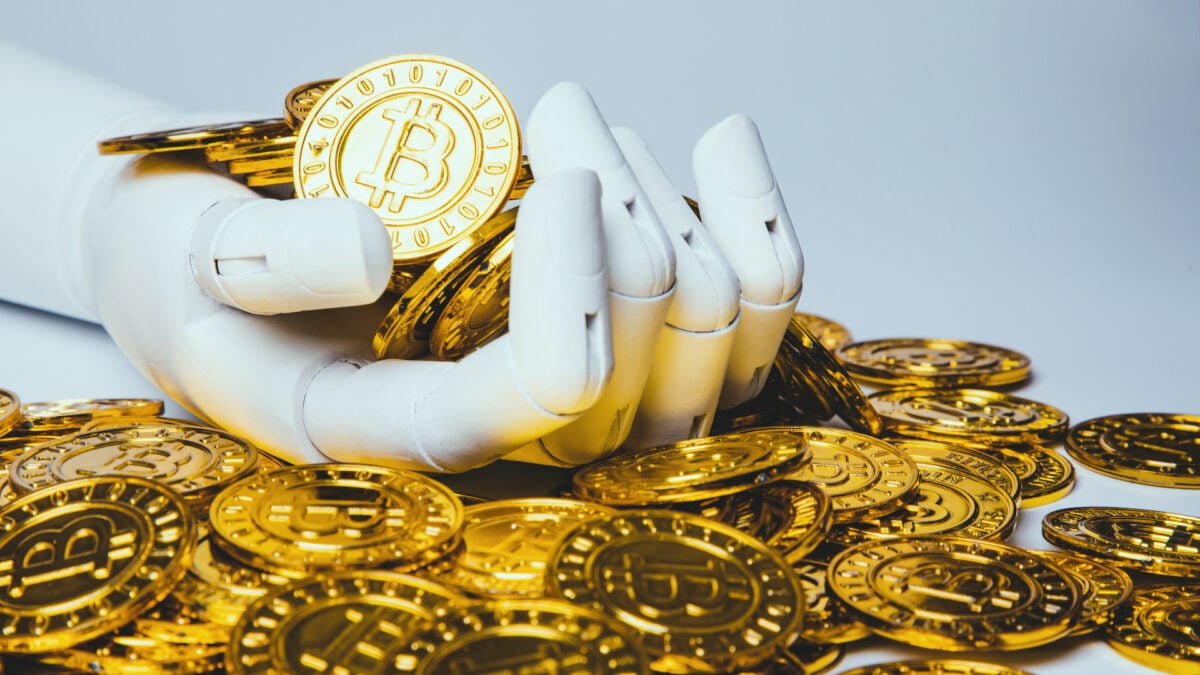

The crypto industry has been filled with many promoters touting dubious use cases of blockchain technology over the years. At various times in its history, crypto was supposed to revolutionize everything from supply chain logistics to the monetization of digital art, but for the most part, bitcoin as a long-term store of value is still the only use case that shows any actual promise. Centrally-issued stablecoins have also become more prominent in recent years; however, they’re also being issued on increasingly centralized railswhich throws into question whether this is really something new or just a new wrapper for traditional finance.
Over the past few years, one of the new sales pitches from crypto promoters has been the combination of blockchain technology with artificial intelligence, and the good news is these promoters have the perfect crypto token to sell you to get rich quickly off this combination of two emerging innovations! However, a new report from researchers at Yale, Harvard, Princeton, and other top universities found that crypto has “limited utility” for solving issues related to payments and trust in AI.
The survey in question, known as the Crypto x AI Survey and associated with the Initiative for Cryptocurrencies and Contracts, lays out the basis for that assessment in its review of potential overlaps. On whether crypto can help AI, the work describes mostly conceptual possibilities rather than proven solutions. Stablecoins and micropayment systems might let autonomous agents handle payments for data samples or compute access without relying on traditional financial intermediaries, while zero-knowledge proofs and trusted execution environments could support verifiable or private computations in AI pipelines. Decentralized physical infrastructure networks and data marketplaces receive attention as ways to distribute resources through token incentives.
Yet the survey states that “crypto lacks significant traction in the payments sector” and calls for “rigorous articulation and demonstration of their utility … rather than only demonstrating feasibility” when it comes to agentic payments. On data and model markets, the authors note that “it remains unclear how else decentralization concretely affects these products and markets,” even in cases where crypto handles settlement while pricing and other core functions remain centralized. The paper concludes that “AI and crypto are still in the very early stages of meaningful integration,” and observes that decentralized governance ideas such as DAOs for AI development “have yet to see real adoption in the mainstream AI community.”
“[B]lockchains are well-suited for timestamping and registering specific digital artifacts,” the paper adds. “This functionality is of limited utility for solving the broader problem of distinguishing AI-generated from human-generated content, however.”
The survey also examines the other side of the equation: whether AI can help crypto. Here, it identifies several areas with more immediate applications, particularly in security and systems design. Graph neural networks and other machine learning methods have demonstrated effectiveness at detecting fraudulent transactions or anomalies by examining blockchain data patterns, often outperforming simpler approaches when sufficient training data is available. Large language models can proactively scan smart contract code for vulnerabilities. However, the analysis also flags corresponding risks, including the potential for AI systems to power more effective attacks on decentralized protocols or to create unpredictable autonomous agents that interact with smart contracts.
AI has become a growing threat in crypto, with one early blockchain security pioneer warning users to stay away from DeFi for now because AI agents could hunt for bugs in smart contracts and use them to drain funds. “Coding agents are superhuman at finding vulnerabilities, and smart contract security is too asymmetric: defenders need to fix every bug while attackers need just one exploit to steal funds,” said OpenZeppelin co-founder Manuel Aráoz.
Of course, AI can also be used defensively by those looking to secure crypto protocols, as was the case with the recent bug found in Zcash that could have allowed an attacker to print cryptocurrency out of thin air. That said, the privacy features of Zcash make it difficult to confirm whether or not this particular bug, which had existed in the wild for four years, had been exploited before an associated patch was released.
Two of the most well-known crypto projects associated with AI are Bittensor and the Sam Altman-backed Worldcoin. Bittensor is focused on creating a decentralized network where participants contribute machine learning models and other AI-related services in exchange for token rewards, while Worldcoin has been focused on solving the problem of Sybil attacks on the internet more generally, which are expected to worsen with the advent of AI. Worldcoin also has its own associated cryptocurrency, and its solution for Sybil attacks is for everyone in the world to have their eyeballs scanned with their dystopian orb hardware (seriously). On Monday, Business Insider reported layoffs at the eyeball-scanning startup.
Projects like Bittensor and Worldcoin have an obvious incentive to hype the supposed overlap between crypto and AI to boost their own tokens. But bitcoin advocates and stablecoin issuers have also gotten in on the act, touting their preferred digital currencies as essential infrastructure for the coming AI agent economy.
USDC stablecoin issuer Circle has been talking about how AI agents will need USDC for payments on a more regular basis and has built out entire infrastructure platforms for the growth it expects to see in this area. On X, bitcoin-focused media outlet TFTC previously posted“[AI agents] are choosing Bitcoin over traditional payment systems for a simple reason: it’s easier to spin up a Lightning wallet than set up a Stripe account.”
That said, there are also plenty of longtime bitcoin-only users (often referred to as bitcoin maximalists) who have seen this story play out before and are skeptical of the claims around crypto and AI, even when it comes to the supposed utility of bitcoin. According to this recent research, it appears AI is currently more likely to assist crypto than the other way around.