Physical Address
304 North Cardinal St.
Dorchester Center, MA 02124
Physical Address
304 North Cardinal St.
Dorchester Center, MA 02124
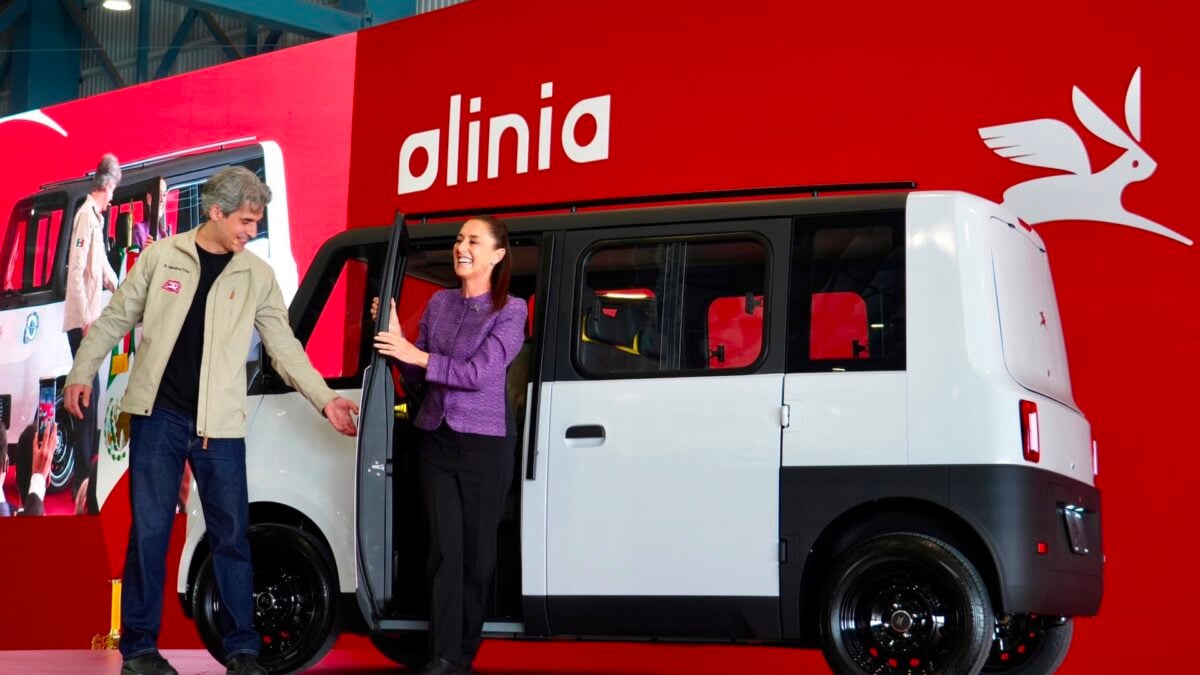
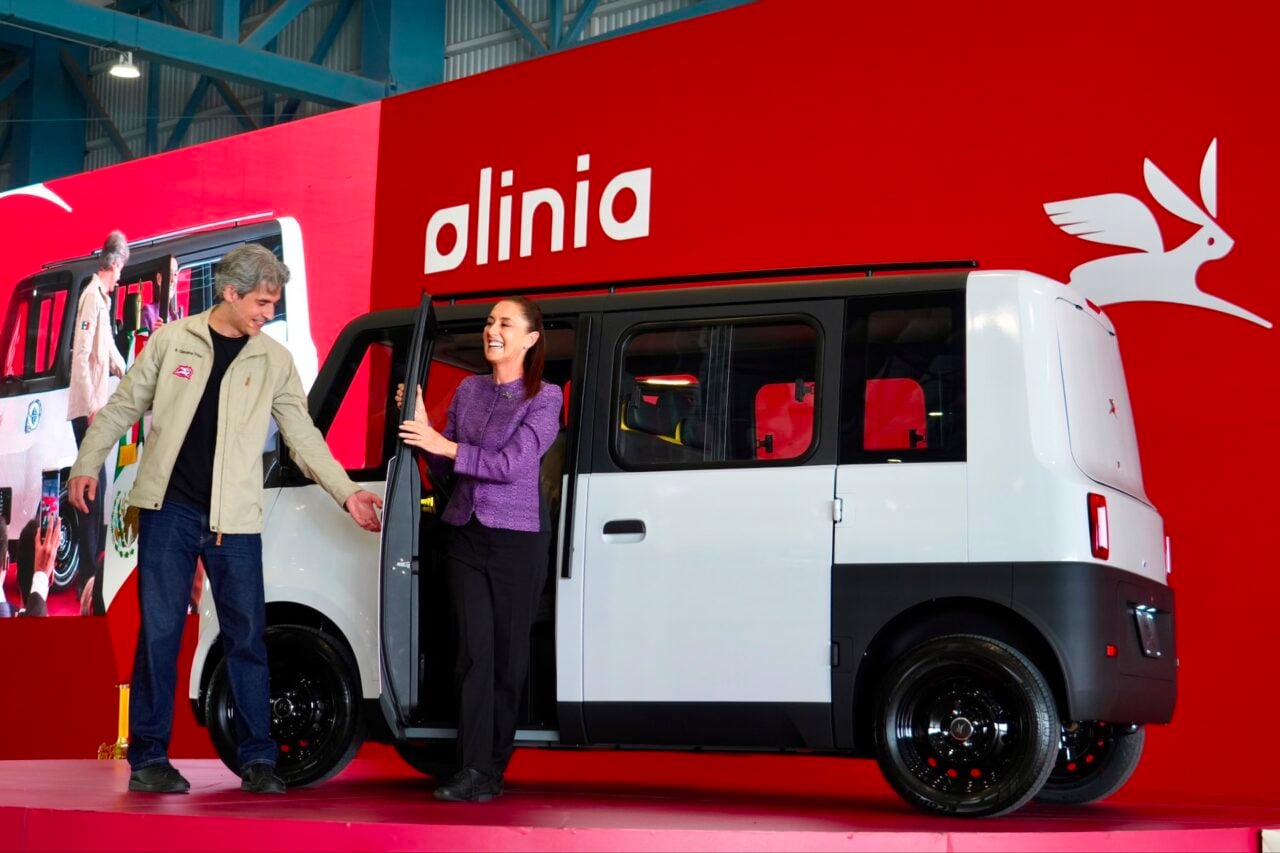
The Mexican government just unveiled a prototype for a new homegrown, ultra-affordable EV.
Mexican President Claudia Sheinbaum drove the prototype, dubbed the Olinia Uno, onto a stage Sunday during an unveiling event inside a Mexican Air Force hangar near Mexico City.
The Olinia Uno is a planned six-passenger car that can travel up to 125 kilometers (77 miles) on a single charge. It is expected to go on sale next summer for about 150,000 Mexican pesos or roughly $8,500, according to a press release.
The EV is part of the president’s Plan México, a six-year initiative meant to boost the country’s economy and manufacturing sector, with the goal of making Mexico one of the world’s 10 largest economies. Among the plan’s other goals is expanding the country’s role in global supply chains by 15% in industries like auto. Sheinbaum originally set the goal of developing a small, affordable EV back in 2025.
“Olinia represents much more than an electric car,” Sheinbaum said at the event. “It represents a seed, the seed of a new innovation ecosystem built from Mexico.”
The car is designed for urban settings and has a top speed of 50 kilometers (31 miles) per hour. It also has enough space to transport someone in a wheelchair and be charged using regular power outlets at home, with a plug similar to what you would use for a microwave or refrigerator.
Still, Project Olinia Director Roberto Capuano Tripp said there are plans to install 2,000 charging stations across Mexico City, the State of Mexico, and Puebla.
Rosaura Ruiz Gutiérrez, Mexico’s secretary of Science, Humanities, Technology and Innovation, said the car is currently built with 50% domestic materials, with the goal of getting that figure to 75% by 2030.
The car’s unvieling comes as some countries around the world continue to push EV adoption with better and more affordable options. The U.S., however, has taken the opposite track.
This year alone, Chinese EV companies have surpassed American-made EVs with breakthroughs in charging speed and driving range. Meanwhile, in the States, Trump canceled federal EV subsidies last year, prompting several automakers to rethink or scale back parts of their EV strategies.
The U.S. has largely been able to keep these more affordable Chinese EVs out of the market through steep tariffs, currently set at 100%. But Chinese automakers are steadily spreading across North America. Chinese EVs are already being sold in Mexico, and Canada announced earlier this year a partnership with China that could allow up to 49,000 Chinese-made EVs into the Canadian market.
Unsurprisingly, some U.S. lawmakers are already trying to stop those cars from coming over the border.
Sen. Elissa Slotkin and Rep. Haley Stevens recently introduced the Protecting America from Chinese Cars Act, which aims to ban connected cars built or designed in China, as well as other adversarial countries like Russia and Iran, from entering the U.S.
This is something Ford CEO Jim Farley called for earlier this year.
“We should not let them into our country,” Farley said during an appearance on Fox & Friends, according to Bloomberg. “Manufacturing is the heart and soul of our country, and for us to lose that to those exports would be devastating to our country.”
He went on to say that preventing those vehicles from entering the U.S. through Canada should be a key issue in upcoming trade negotiations between the U.S., Canada, and Mexico.
“I sure hope we don’t allow them to come across the border,” Farley said.
It remains to be seen whether the Olinia One will face similar pushback from the U.S. once it goes on sale.