Physical Address
304 North Cardinal St.
Dorchester Center, MA 02124
Physical Address
304 North Cardinal St.
Dorchester Center, MA 02124

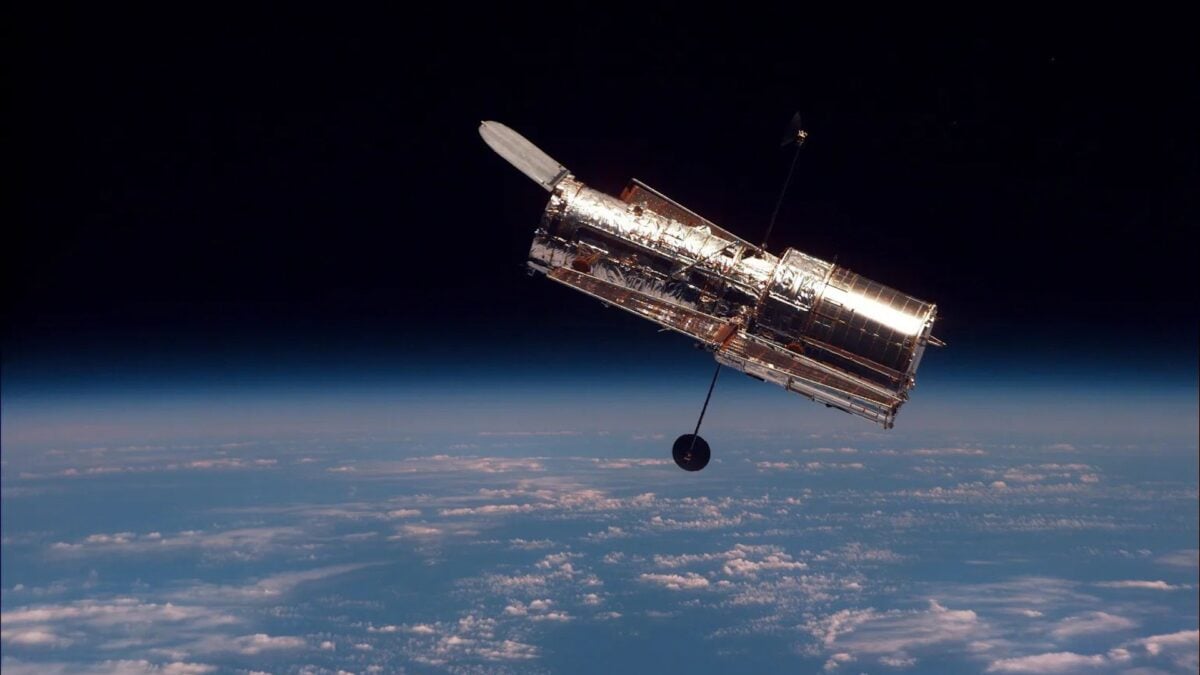

NASA’s Hubble space telescope is running out of time. The aging observatory is slowly being dragged down toward Earth and is estimated to reenter through the atmosphere by 2033. NASA could save it, but only if Hubble becomes more affordable.
NASA is currently preparing to extend the lifespan of another Earth-orbiting telescope—the Neil Gehrels Swift Observatory. The agency is launching a rescue mission later this month, aiming to raise Swift’s altitude and shift it into a more stable orbit.
The space agency has been considering a similar reboost mission for the Hubble telescope if it can find a way to lower its operating costs. “It was built in a different era, and it’s more costly to maintain and to get the best science out of it,” Shawn Domagal-Goldman, director of NASA’s astrophysics division, said during a recent meeting of the Astronomy and Astrophysics Advisory Committee, SpaceNews reported.
Swift launched toward low-Earth orbit on November 20, 2004, to study the most powerful explosions in the cosmos: gamma-ray bursts. In the two decades since it launched, Swift gradually lost altitude due to atmospheric drag and has a 50% chance of an uncontrolled reentry by mid-2026.
To avoid Swift being dragged down low enough to hit Earth’s atmosphere, NASA tapped an Arizona-based startup to develop a spacecraft designed to boost Swift’s orbit. The LINK spacecraft is designed to rendezvous with Swift and nudge the spacecraft to a more stable orbit, thereby extending its lifespan.
“These reboost things are now not just available to us as an agency, but the costs are lower than I think I anticipated,” Domagal-Goldman was quoted as saying during the meeting. “That does make that return on investment more enticing.”
When it comes to Hubble, however, there are other things to consider. “We are open to a reboost of Hubble,” Domagal-Goldman added. “So, we have to first figure out how we’re going to bring down the operations costs.”
NASA launched the Hubble Space Telescope on April 24, 1990, using the Space Shuttle Discovery. At the beginning of its mission, the telescope operated at an altitude as high as 360 miles (579 kilometers) in low Earth orbit, but it has slowly descended over the years. Hubble is currently at around 326 miles (525 kilometers) above Earth’s surface, according to NASA.
Between 1993 and 2009, NASA boosted Hubble’s orbit multiple times using its space shuttle servicing missions. More recently, the agency began considering a commercial reboost mission for Hubble.
In 2022, NASA and SpaceX announced a feasibility study to raise Hubble to its initial altitude of 373 miles (600 kilometers), allowing it to remain operational for a few more years. The agency didn’t follow up with its rescue mission, and Hubble is currently at risk of burning up in Earth’s atmosphere within a few years’ time.
Earlier this year, a team of scientists estimated that Hubble could reenter Earth’s atmosphere in 2033. There’s also a 1 in 10 chance that the iconic observatory could come to its fiery demise as early as 2029.
Since its launch, Hubble has transformed our understanding of the cosmos. Using its 94.5-inch-wide (2.5-meter) mirror, the telescope precisely measured the distance to stars and galaxies, allowing scientists to determine the expansion rate of the universe.
Keeping Hubble alive, however, does come at a steep price. During the 2025 fiscal year, the space agency spent $98.8 million on the telescope. NASA has been weighing the cost of extending the telescope’s operations versus its scientific returns and whether it’s time to free up the agency’s resources for new missions.
If a reboost mission is in the cards for Hubble, NASA would first need to find a way to bring down the telescope’s cost of operations so that it can continue to deliver mind-bending images and data for more years to come.