Physical Address
304 North Cardinal St.
Dorchester Center, MA 02124
Physical Address
304 North Cardinal St.
Dorchester Center, MA 02124
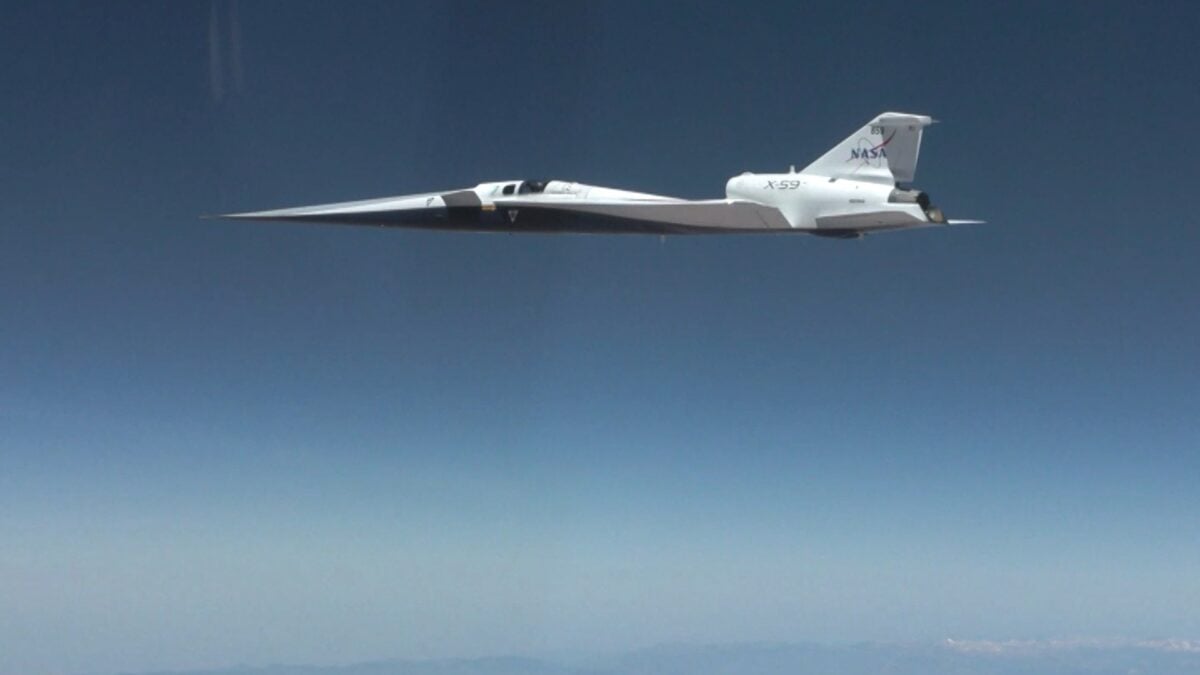
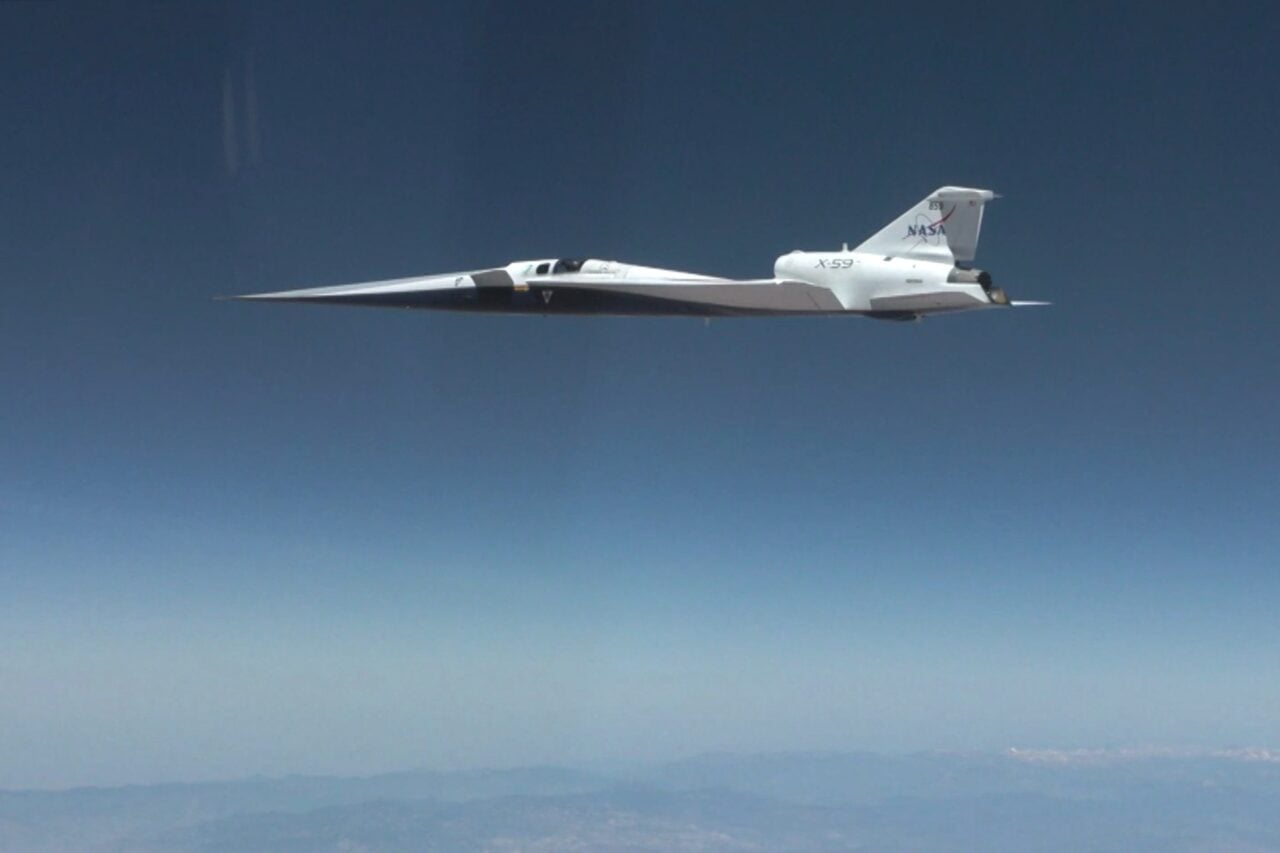
NASA’s X-59 aircraft has finally flown faster than the speed of sound, bringing us one step closer to supersonic flight without the loud, thunder-like clap noise that comes with it.
The experimental vehicle took off from the Edwards Air Force Base in California on June 5 at 2 p.m. ET for its latest test flight. During its 81-minute run in the air, X-59 reached a top speed of approximately Mach 1.1, or 713 miles per hour (1,147 kilometers per hour), breaking the sound barrier for the first time.
Next up, the aircraft will conduct a so-called mission conditions flight, where it will hit Mach 1.4, or fly at 925 miles per hour (1,488 km/hr) at approximately 55,000 feet (16,764 meters). That’s the same speed and altitude NASA will use to gather data from the public on the aircraft’s quiet thump.
The X-59 is designed to break the sound barrier without producing the loud, explosive sound known as a sonic boom. Instead of a sonic boom, the X-59 aircraft is meant to mitigate the noise and release a sonic thump, according to NASA. In doing so, the experimental aircraft could pave the way for commercial supersonic flight over land.
Since the aircraft’s inaugural flight in October 2025, the team at NASA has been testing X-59’s performance at higher altitudes and faster speeds. Over the last few months, X-59 has flown 16 times in preparation for its supersonic debut.
Friday’s test flight represents a major milestone as the aircraft expands into the supersonic portion of its flight envelope. X-59 flew at supersonic speeds at an altitude of 43,400 feet (13,100 meters).
As the aircraft broke the sound barrier, however, its quiet thump was not heard. A NASA F-15 chase plane flew nearby to monitor the aircraft during the latest test flight, drowning out any sound made by the X-59 with its own sonic booms.
“These tests are the first phase of the X-59’s flight testing,” NASA wrote in a statement. “They are focused on performance and involve chase plane monitoring. When the aircraft completes this phase it will enter another, focused on its sound profile in order to verify its quiet thump capability.”
NASA is preparing for the next phase of test flights, when X-59 soars over several U.S. communities. The agency will use these flights to gather data on how people perceive the aircraft’s quiet thump.
In 1973, the Federal Aviation Administration prohibited supersonic flights of non-military aircraft over land so as not to startle or annoy people living in cities where supersonic jets fly overhead. The data from X-59’s test flights will be used to help establish new data-driven noise standards for commercial supersonic flights.
NASA began developing its quiet supersonic aircraft nearly a decade ago, awarding Lockheed Martin with a $247.5 million contract to build X-59. The 99.7-foot (30.39-meter) long aircraft has a wingspan of just 29.5 feet (9 meters) and a needle-like nose. The aircraft’s sharp design is meant to reduce the pressure change that flows over the ground, while the engine is mounted on top to reduce the amount of noise from the plane that reaches the ground.
The X-59’s ability to keep it down while reaching maximum speeds will be put to the test soon, and hopefully the aircraft can deliver that long-anticipated thump.