Physical Address
304 North Cardinal St.
Dorchester Center, MA 02124
Physical Address
304 North Cardinal St.
Dorchester Center, MA 02124

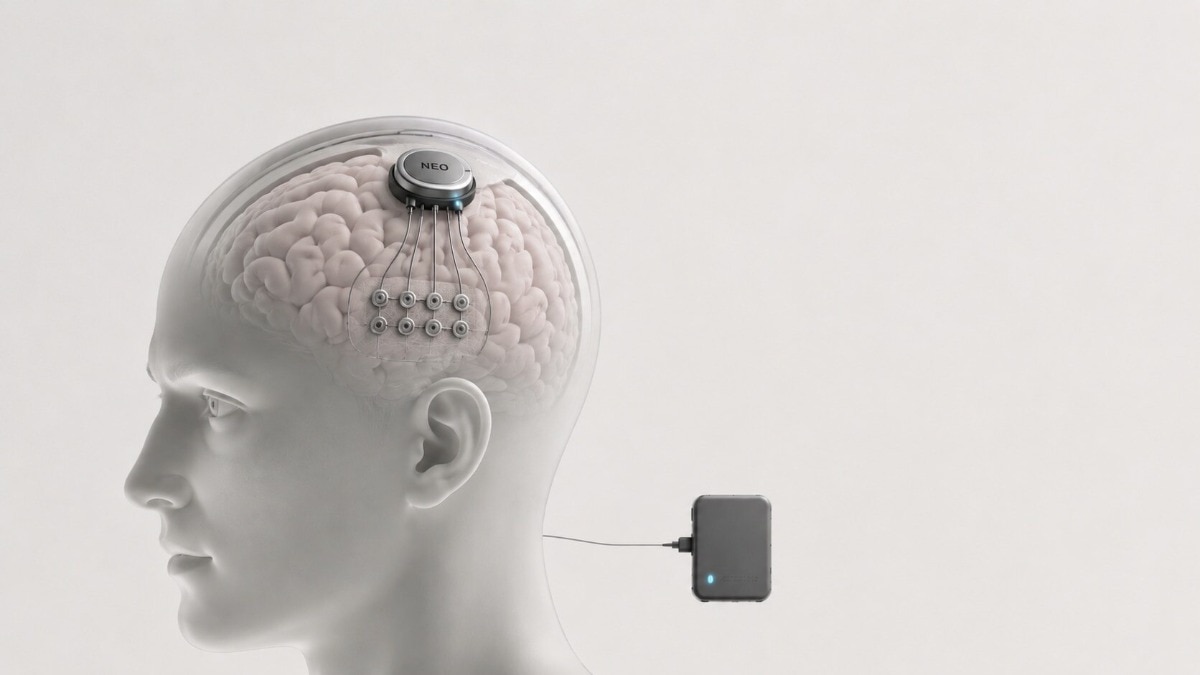
China has leaped ahead in the global race for neurotechnology, securing the world’s first commercial approval for an invasive brain-computer interface (BCI). The device, named NEO, beat Elon Musk’s Neuralink to the market after receiving the green light from Chinese regulators for medical use.
Developed by Tsinghua University researchers and Shanghai-based Neuracle Medical Technology, NEO is designed to restore hand movements and device control for patients living with paralysis and spinal cord injuries.
How NEO works
Unlike traditional invasive implants, NEO adopts a minimally invasive approach. According to The New York Timesthe device places electrodes on the brain’s protective membrane rather than penetrating the deep brain tissue itself. This chip captures neural signals and translates them into digital commands, allowing users to operate external assistive technology like robotic hands and rehabilitation gloves.
MUST READ: Anthropic and White House officials to hold discussions around Claude Fable 5 ban
Clinical trials involved 36 patients over an extended period. Participants — particularly those with quadriplegia from cervical spinal cord injuries — showed significant improvements in motor control and hand-grasping abilities. Regulators noted these advancements substantially enhanced the patients’ overall quality of life.
NEO vs Neuralink
This commercial rollout marks a major milestone, giving China a first-mover advantage over its US rivals. While Elon Musk’s Neuralink has implanted its N1 chip in more than 20 patients with promising results, the technology remains tied up in the United States regulatory review process and lacks commercial clearance. China’s accelerated regulatory pathway and direct government backing ultimately fast-tracked NEO from the lab to the market.
The risks ahead
The medical breakthrough comes with sharp caveats. Experts warn that any brain surgery carries inherent physical risks, including:
The technology has also ignited fierce debates around cybersecurity, privacy, and ethics. Because BCIs harvest data directly from the human brain, experts have raised alarms over data ownership, surveillance vulnerabilities, and the threat of unauthorized access to sensitive neural information. Researchers are already questioning the long-term ethical guardrails needed as the technology evolves toward thought-based communication and memory enhancement.
How NEO works
According to The New York TimesNEO uses a minimally invasive approach in which electrodes are placed on the brain’s protective membrane rather than penetrating deep into brain tissue. The chip captures neural signals and converts them into digital commands, allowing users to control assistive devices such as robotic hands and rehabilitation gloves.
ALSO READ: UK PM Keir Starmer set to announce social media ban for children under 16
Clinical testing reportedly involved 36 patients over an extended trial period, with participants showing notable improvements in hand-grasping ability and motor control. Chinese regulators said the improvements significantly enhanced patients’ quality of life, particularly those living with quadriplegia caused by cervical spinal cord injuries.
NEO v/s Neuralink
The approval is a major milestone in neurotechnology and places China ahead of Neuralink in terms of commercial deployment. While Neuralink has implanted its N1 chip in more than 20 patients and demonstrated promising results, its technology remains under regulatory review in the United States and has not yet received approval for commercial sale. China’s faster regulatory pathway and government support for brain-computer interfaces helped accelerate NEO’s journey from laboratory testing to market approval.