Physical Address
304 North Cardinal St.
Dorchester Center, MA 02124
Physical Address
304 North Cardinal St.
Dorchester Center, MA 02124
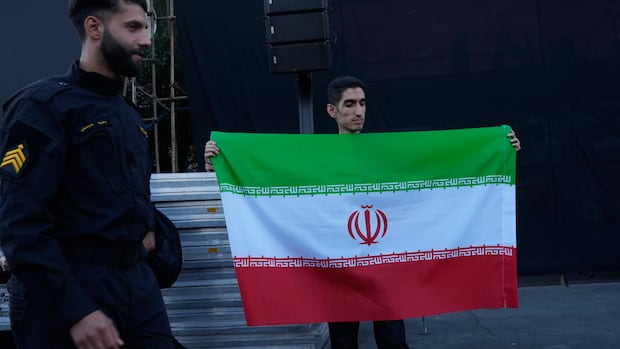
U.S. President Donald Trump and senior Iranian officials say they have reached a memorandum of understanding to bring an end to the war pitting the United States and Israel against Iran.
The war began when the two allies struck Iran on Feb. 28, and two days later, Iranian-backed militant group Hezbollah attacked Israel in retaliation — leading Israel to strike southern Lebanon, where Hezbollah is based.
Here’s what we know about the deal so far.
The two sides have not jointly released a copy of the deal, but some key conclusions can be drawn based on what has been posted on social media by Trump, stated by Iran’s government-controlled media or confirmed by mediator Pakistan.
The memorandum of understanding appears to be more than just a ceasefire but less than a full-fledged peace agreement.
“Both sides have declared the immediate and permanent termination of military operations on all fronts, including in Lebanon,” Pakistani Prime Minister Shehbaz Sharif said in a social media post.
The Lebanon element is crucial because that means the deal imposes a ceasefire on the related conflict between Israel and Hezbollah, which had been a key demand of Iran.
The agreement does not, however, specify what happens to Iran’s nuclear program or its stockpile of highly enriched uranium. Instead, it sets out a 60-day timeline for technical discussions on that subject.

The deal would reopen the Strait of Hormuz, ending both Iran’s attacks on shipping and the U.S. naval blockade of Iranian ports, Reuters reported.
“Ships of the World, start your engines. Let the oil flow!” Trump posted on his Truth Social platform on Sunday evening.
The U.S. president said there would be a “toll-free” opening of the strait once the agreement is signed — set to happen on Friday in Switzerland — which suggests Iran has backed off its earlier position of charging commercial shipping for passage.
The body of water at the mouth of the Persian Gulf was the shipping route for 20 per cent of the world’s crude oil before the war triggered Tehran to close it by threatening foreign ships, triggering spikes in oil and fuel prices worldwide.
The issue that ostensibly triggered the war — Iran’s reported progress toward building a nuclear weapon — becomes the subject of technical talks after the memorandum is signed on Friday.
The fate of Iran’s nuclear program will be the most highly scrutinized aspect of whatever emerges from the talks.

In a Canadian exclusive, the CBC has been given permission to report from Iran. The government there imposes restrictions on international journalists but does not check our material. CBC News senior international correspondent Margaret Evans takes viewers to a pro-government rally in Tehran.
Sen. Lindsey Graham, a Republican from South Carolina who has long been hawkish on Iran, is signalling that Capitol Hill will be part of that scrutiny, saying he will be watching the negotiations closely.
“Under our law, any nuclear deal with Iran will be sent to Congress for review and a vote. I look forward to reviewing the final product,” Graham posted on social media platform X.
The memorandum does not resolve the conflict over Iran’s nuclear program, said Karim Sadjadpour, an Iran expert and senior fellow at the Carnegie Endowment for International Peace, a think-tank in Washington, D.C.
“The thorniest issues have been deferred for future negotiations, and I’m not terribly optimistic that they’re going to be resolved in a 60-day time frame,” Sadjadpour told CNN on Sunday.
According to Iran’s government-aligned media outlet Mehr News Agency, the memorandum calls for half of Iran’s $24 billion US in frozen assets to be unfrozen before the detailed talks would continue.
The agreement would also suspend sanctions on sales of Iranian oil and petrochemical products, and would require the U.S. to present a $300-billion reconstruction plan for the country, Mehr reported.
Those details were not immediately confirmed by U.S. officials.
In a joint statement, the U.K, France, Germany and Italy said they are prepared to lift “relevant sanctions” against Iran if the country takes “clear, verifiable steps” toward ending its nuclear program.

Get the latest on CBCNews.ca, the CBC News App, and CBC News Network for breaking news and analysis.
While technically speaking the memorandum of understanding is not official until it’s signed on Friday, several analysts believe the biggest tests for long-term peace are yet to come.
The Hezbollah-Israel conflict centred on southern Lebanon has the greatest potential to scuttle progress toward a final U.S.-Iran peace deal, said Nader Hashemi, an associate professor of Middle East and Islamic politics at Georgetown University in Washington.
“Let’s not forget that Israel right now occupies roughly 15 per cent of Lebanon. There are going to be skirmishes, tit-for-tat strikes between Hezbollah and Israel,” Hashemi told CBC News Network on Sunday.
“It’s an open question whether Donald Trump can rein in [Israeli Prime Minister Benjamin] Netanyahu and whether Iran can rein in Hezbollah to make sure that this agreement stays on track.”
Retired admiral Andrew Loiselle, former director of air warfare for the U.S. navy, predicts the deal will be a win for the U.S. in the long run.
Loiselle told CBC News that a key immediate indicator of whether the agreement will stick will be Iran carrying out its commitment to allow safe passage of ships through the Strait of Hormuz.