Physical Address
304 North Cardinal St.
Dorchester Center, MA 02124
Physical Address
304 North Cardinal St.
Dorchester Center, MA 02124
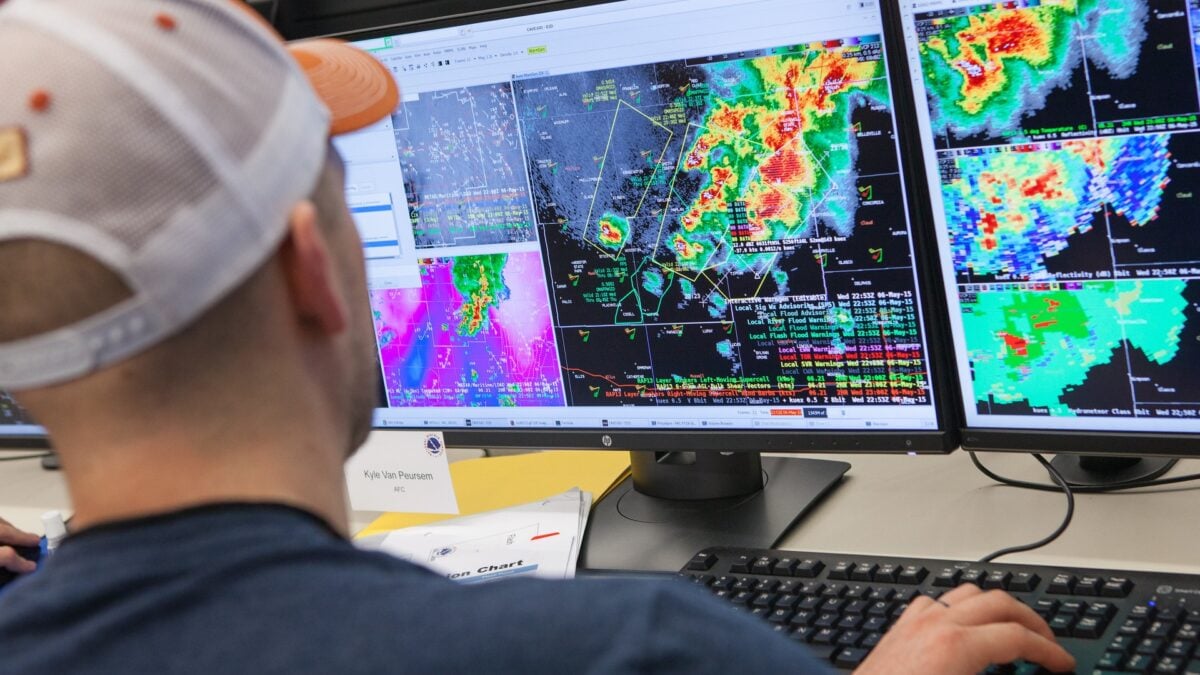
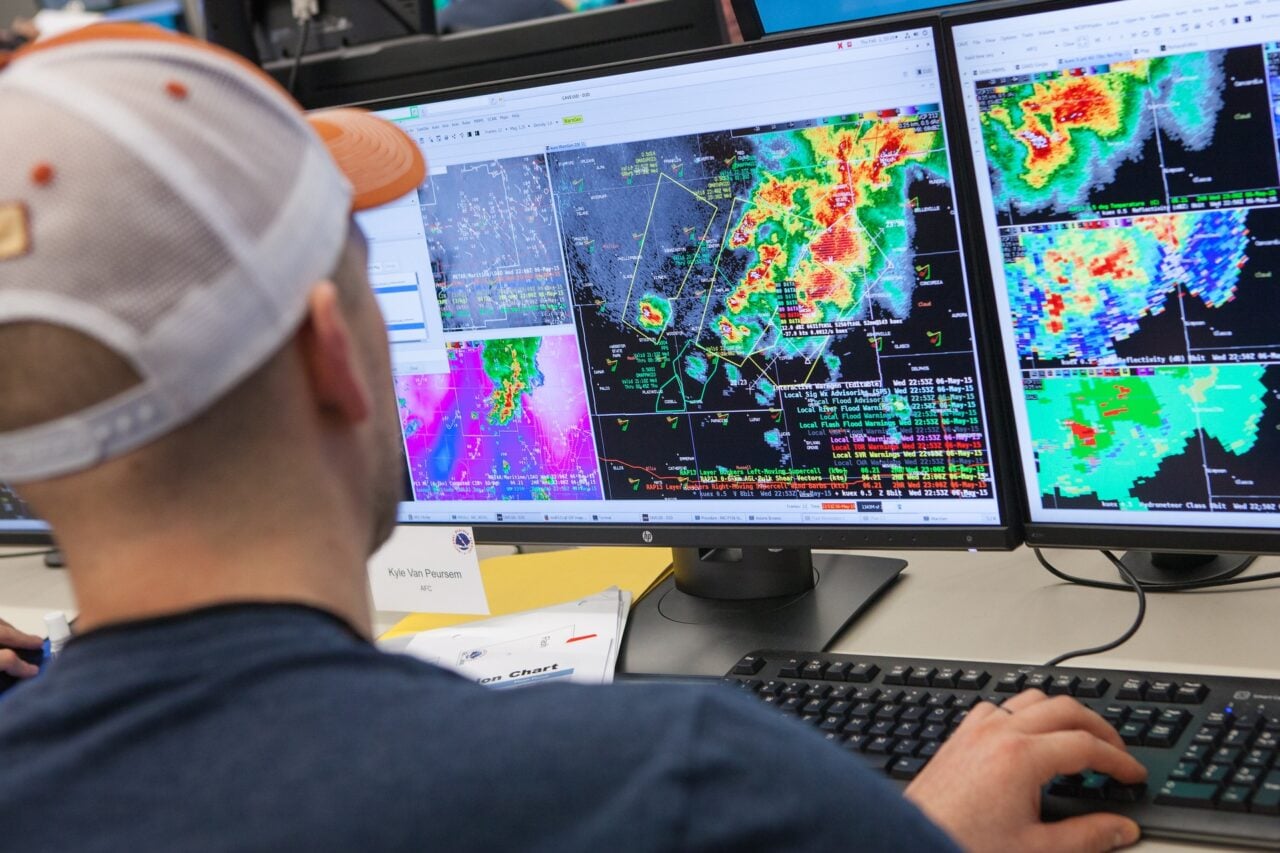
Attention: DOGE’d and RIF’ed U.S. government meteorologists and climate scientists. JPMorgan Chase & Co. is looking to hire a new executive director focused on “catastrophe modeling.” Ideally, someone who could be a “subject matter expert in natural catastrophe and climate,” upping their portfolio’s “resilience to physical climate risks.”
And they’re not alone. Some hedge funds are offering as much as $1 million per year for the right extreme weather forecaster. As one recruiter who specializes in placing experts in this niche world of “insurance-linked securities” told Bloomberg News, anthropogenic climate change’s most canny and enterprising Cassandras have been netting “exponentially higher” pay bumps compared to their past salaries over the last two years.
Not unlike the mortgage-backed securities of the 2008 financial crisis, insurance-linked securities (ILS) reimagine an insurance company’s outstanding policy risks and potential rewards as assets that it can market to outside investors, like hedge funds. Imagine an insurance company is worried that potential floods might force it to lose millions fulfilling homeowners’ claims during an impending hurricane. It could issue a so-called catastrophe bond whose purchasers effectively backstop those insurance payments—unless, of course, those genius investors have better climate scientists on staff than the insurance company does.
If the storm passes with the investors’ climate bet victorious, that catastrophe bond “matures” just like a regular bond, with serious interest. Back in a more dignified age, as a fact page by the Financial Industry Regulatory Authority notes, “cat bonds” were typically thought of as the high-stakes gambling they are, derided as “non-investment grade,” “high yield,” or “junk” bonds. Today, well, you can bet on impending weather disasters on Kalshi or Polymarket.
“Academic meteorologists, with strong data science skills, who can translate their skills into the commodity trading environment, are one of—if not the most—sought-after skill set,” according to commodities veteran Ross Gregory, who spoke to Bloomberg amid prior coverage of this dystopian trend back in 2025.
Just to be clear, the median annual salary for “atmospheric scientists, including meteorologists” outside the rarified world of climate catastrophe profiteers was about $97,450 in 2024, the last time this data was published by the U.S. Bureau of Labor Statistics. One recruiter trying to source climate quants for a hedge fund, Mitesh Parikh of Selby Jennings, told the business publication that a standard compensation package for these hires now hovers between $400,000 and $670,000.
Economists have pointed out that part of the enthusiasm for ILS amid these globally turbulent times stems from the fact that they are “uncorrelated” assets, meaning their value is wholly independent of other sectors of the economy. The wind either blows the wildfire one way or the other, regardless of oil prices or SpaceX’s IPO.
As Italian economists Antonella Cappiello and Emanuele Vannucci put it in their 2025 study, these disaster-profiting investments are “fundamental for portfolio diversification during crises and episodes of high market volatility.”
American risk management firm Gallagher noted in a report this May that roughly 77% of global catastrophe insurance losses in 2025 stemmed from events within the U.S., with California and Louisiana wildfires alone driving 32% of global insured losses. But alternative capital, they noted, and particularly big bets on various impending disasters via catastrophe bonds, poured in, creating “one of the largest increases witnessed in the history of the Reinsurance Market Report.”
Another recent report, put out by credit rating agency AM Best, calculated that the ILS market has climbed from $107 billion in 2024 to $120 billion last year, with more hedging on disaster anticipated for 2026. These perverse incentives have spurred some academics to push for government-assisted insurance funds to correct for all this misery and profiteering.
In the private sector, though, where people are laser-focused on making money, disaster profiteers at the credit rating agency Moody’s are already touting new catastrophe models accelerated by AI to one day save the costs of paying to feed and house any more flesh-and-blood climate scientists.
“AI doesn’t rewrite the science behind catastrophe models, but it amplifies their impact,” according to Moody’s. “In an era of escalating natural catastrophe risk, speed to insight is not a luxury; it’s a necessity.”